Thursday, 19 June 2025

Introduction to music videos

This post is focused around studying music videos to prepare to the possibility of music videos coming in in the component one exam. However, it also provides useful context and examples of how to approach making your own music videos


Two kinds of question!

  1. Representation - how something is presented again by the producer of a media
  2. Media language - the things which build a media product. Media language questions are analysis questions.

We need to prepare for two things:


  1. looking at representational contexts in the set music videos
  2. analysing unseen music videos using the textual analysis toolkit


What is a music video?


  • A music video is an advert for a song 
  • A music video is a visual interpretation of a piece of music 


Andrew Goodwin’s three varieties of music videos


  1. Narrative - tell a story, sometimes featuring the performers, sometimes not. Often this is based on the lyrics
  2. Performance  - dancing, singing, lip syncing, playing instruments, gestures 
  3. Abstract - fanciful imagery that may or may not have deeper symbolic significance


Exploring music videos


France Gall - Baby Pop


  • While this music video was released in 1966, it codifies many elements of music videos that are still used today, including:
  • Use of lip synching combined with a fourth wall breaking direct mode of address is highly conventional of music videos, establishing a sense of connection between the performer and the audience
  • The use of synchronised dance routines is also highly conventional, and communicates a sense of encouragement to the audience, inviting them to do the same!
  • A range of shot types, focusing on close ups of the performer, and establishing Gall asd the star of her own video 
  • A limited range of editing, focusing on straightforward cross cutting from location to location. Lacking modern techniques, it still establishes a sense of place
  • The MES of trendy and then fashionable costumes allows the video to appeal to a young female target audience 
  • A range of dance routines, although the performance is understated and simplistic
  • Lip syncing, with the performer looking directly in to the camera in a direct address. Breaking the fourth wall is also breaking the rules of cinema. However it allows her to interact with the audience
  • Her costume is highly fashionable, and extremely reminiscent of French popular fashion of the 1960’s. Helping her to appeal to 1960s teenage teenage girls, yet also young male audiences 
  • A range of camera angles are used throughout the video 
  • A range of interior and exteriors helps to maintain audience attention


Convergence: the coming together of two previously separate industries. Music videos combine music and film. 


The combination of music and television is highly profitable. In the 80s there was a shift from young people buying records to young people watching television. Therefore music videos allowed young people to have exposure to the music they were turning there backs on, and allowed record labels to PULL these audiences back to being profitable customers


Why music videos? 


  • It creates a more entertaining product
  • It allows the song to be advertised 
  • It allows an artist or celebrity to be established 
  • It allows a narrative to be constructed 
  • It allows for the maximisation of profit by creating a memorable product that will target multiple audiences 


Lipstick - Orange Caramel 


  • The MES of matching outfitters for the main performers symbolises friendship and unity. This is further anchored through the use of stereotypically cutesy hand gestures and dance moves which suggest that the target audience of teenage girls are engaged and positioned through this performance
  • The MES of costumes creates a further sense of unity between the performers. However, they are differentiated between certain colourful elements. Furthermore, the costumes are bold and extravagant, which further reinforces the outlandish qualities 
  • While the premise of the music video is highly conventional, the setting is saturated an a hyper intense orange, which clearly links to the band. Furthermore, the neon orange colours connote joy and youthful exuberance
  • The performers are wearing tight, short costumes, and this combined with the attractive performers constructs a definite ideology of sexualisation. This reinforces certain societal standards for women, and presents an aspirational mode of address to the young female target audience


Orange Caramel  - Catalina 


  • An ongoing theme is constructed through the MES of costume, which represents these young women as fish and simultaneously food products. This alarming ideological perspective is emphasised through the striking MES of cellophane being wrapped around the women, and the distancing BEV shot of them thrashing in synchronisation 
  • The iconography of women being trapped and clearly in distress is not only highly referential of the horror film but also highly typical of a pop music video 
  • The iconography of this video is highly stereotypical. The MES of chopsticks and rice is woven in to the costumes of the performers is very funny, and creates a stereotypical representation of south Korean people 
  • The editing is fast paced, precise and extremely clean, which mirrors the tempo of the song. In this sense, the video looks like the song sounds 


Lingua Ignota - PENNSYLVANIA FURNACE


  • The MES of the costume constructs a binary opposition between conservatism and liberalism. While elements of it make reference to religious costume, the sheer elements of her dress reveal her underwear, constructing a confusing and contradictory node of address. 
  • The music itself is stripped back indie, and yet the lyrics are dressing and powerful. The music itself is mellow and soft, which is further anchored through the setting of bleak, empty, yet relaxing fields. 
  • The video has been colour graded to emphasise the cold blue tones of the naturalistic setting, This constructs a miserable, unhappy, and depressing mode of address, which is further reinforced through the atypical dance routine, that emphasises emotion over a skillful set of practices
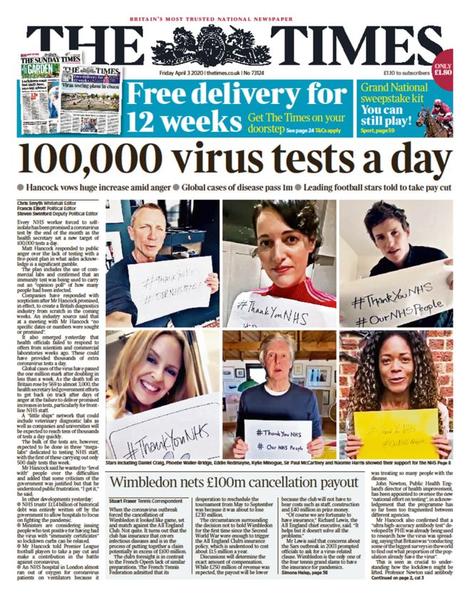
Newspapers: industry and contextual information

The contextual information in this post was correct circa 2025. It is worth remembering that the newspaper industry is in a constant state of flux, and we strongly recommend doing your own research!

For component one section b, if newspapers come up, do NOT refer to the  set text editions! The set edition should only be used if you are specifically asked to use it! And you only ever could be asked to use it in the representation comparison question!

(c) Explain the impact of economic contexts on the newspaper industry. Refer to the Times to support your points. [10] - The newspaper industry has declined significantly due to competition from online and digitally convergent media

(b) How do media producers target specialised audiences? Refer to a print edition of The Daily Mirror to support your points. [12] - Newspapers target their specialised target audiences in a range of straightforward and established ways, to ensure maximum engagement and audience alignment

  1. Use Wikipedia to find key facts about the finances and production contexts of these newspapers
  2. Pick out specific examples from the Donald Trump print edition (2024) to find specific examples to support your points - https://lr-media.blogspot.com/2024/11/example-newspaper-for-2024-2026-cohort.html 
  3. List relevant and useful theories that you can drop in the audience question in particular 

Fact file


The Times


  • 2020 circulation: 365,000
  • 2014 circulation: 390,000
  • 2000 circulation: ALLEDGEDLY 726,000 a steady decline
  • Owned by News UK, a subsidiary of News Corp, a billionaire owned multinational conglomerate. News UK also publishes The Sun. But News International, own Fox in part, although Disney bought out much of the company to eliminate competition Conglomeration reduces risk 
  • Middle class, middle aged, white collar, managerial, corporate 
  • Competition from The Guardian (left wing), The Financial Times, The Daily Telegraph 
  • Right wing (centre right), supports the conservative. Middle class people in the UK tend to skew right wing 
  • Price of the times has almost tripled in a decade to £2.80. However, the middle class, affluent target audience are clearly willing to pay this… case in point, The Times Website is subscription based and charges £26 a month, a selling point to the middle class audience?

The Daily Mirror


  • 2024 circulation - 196,000
  • 2000 circulation - 2.4 million - a collapse of readership
  • Reach PLC, a horizontally integrated UK conglomerate that specialises in acquiring local newspapers. Facing challenges from competition from digitally convent media, Reach PLC have focused on digitally convergent such as newspaper websites and online gambling
  • Working class, middle aged, blue collar workers and manual laborers
  • Competition from the right wing The Sun and The Daily Mail
  • Left wing ideological perspective: support the labour party. Working class people in the UK tend to skew right wing 
  • Prince of Daily Mirror has shot up from 35p in 2004 to £1.80 in 2024, partly due to inflation and the financial situation of the company. The Sun currently costs £1.10… 
  • The mirror website has low production values, and predominantly makes money through clickbait advertisements

PRINT EDITION EXAMPLES November 7th 2024 - how do these newspapers minimise risk and maximise profit in a digitally convergent world? And how do they target their very specific and specialised target audiences?


The Times


  • While the front page headline leans towards supporting Trump, it is not overtly biased, which is typical of broadsheet newspapers. The lexis of the headline, “golden age” is optimistic and reasonably sophisticated, and suggests a positive representation of Trump
  • The main image is both patriarchal and patriotic in it’s mode of address. Throughout the newspaper, the selection of images of trump are broadly respectful
  • The Times focuses on hard, serious news. “Berry Bros fear inheritance tax is a body blow” this financial story, anchored with the highly middle class image of a Cambridge student conducting wine tasting.

The Daily Mirror


  • What have the done… Again?”. Lexis is negative and pessimistic, yet also informal
  • While the mirror selects the same image for the front page story, many images of trump  in the mirror are unflattering, reinforcing the ideology that he is unfit to rule
  • An emphasis on soft news stories, including celebrity gossip and speculation over the new James Bond movie. This focus on gossip will stereotypically appeal to a working class specialised audience of those in manual labour 

Tuesday, 17 June 2025

ADAM CURTIS - SHIFTY - NOW ON iPLAYER


Adam Curtis makes very beautiful, uncompromising and often terrifying documentaries about how we make sense of the world. Through his access to The BBC's vast archive of news and documentary footage, he typically pieces together a collage of fractured narratives that forces the audience to come to their own understandings and conclusions. Shifty, his latest series, is a history of the radical changes in the UK from the late 1970s to the mid 2010's. This is not a conventional historical documentary, and instead uses a range of often confusing archive footage to explore how meaning collapsed and became 'shifty' after the establishment of Margaret Thatcher's government. In doing so, the series explores identity, culture, media, politics and pot-colonialism.

In short, this documentary is as close as it's possible to get to 'media studies the TV show. The conclusion to this documentary is the same as the conclusion to every Adam Curtis documentary: that meaning has collapsed, that we cannot make sense of the world now, and that we cannot tell the difference between what is real and what is not real. 

Curtis's style of documentary film making is marmite. You may well hate it. It provides now answers, but asks complex questions instead, forcing the audience to come to their own conclusions. But if this sounds up your street, you may welcome as obsessed with Adam Curtis's documentary films as I am!

Friday, 13 June 2025

Unseen textual analysis practice: PG tips advert

PG Tips | Live Life One Tea at a Time | At Home With Monkey: Explore how media language combines to create meaning


This advertisement uses many conventions of the reality show in a manner which will be accessible and easily recognisable to it's working class target audience


  • PG tips connotations of working class identity
  • MES is stereotypical working class, newbuild house, aspirational 
  • Intertextual references to TOWIE
  • Tabloid newspaper: symbolic of working class identity 
  • Stereotypical and hyperreal representation of working class lifestyle 
  • Model is hegemonically attractive yet also stereotypical working class. Appealing to middle aged heterosexual men, yet also realistic and relatable to a heterosexual female audience 
  • Ideology
  • Narrative
  • Intertextuality
  • Married couple 
  • Middle aged, working class, white British people 
  • PG tips: stereotypical working class 
  • MES of the stacked boxes suggests a humorous obsession with the brand 
  • Performance: shouting at children
  • Stereotypical working class setting
  • References to reality shows like TOWIE
  • Soundtrack is stereotypically British and comedic, reference to comedy shows 
  • The newspaper constructs a hyperreal representation of the working class
  • The woman is hegemonically attractive, appealing to a heterosexual male audience , yet relatable for a female audience 

Representation and newspapers - the 'partygate' editions

Component one  A - Representation question is ALWAYS 30 marks, ALWAYS an hour and ALWAYS comparing a SET TEXT to an UNSEEN EXAMPLE.


Who, what where why when is represented in the set texts?


  • EVENT - ‘partygate’. A reference to the ‘Watergate’ scandal. An intertextual reference that will appeal to an older target audience…
  • POLITICAL PARTY - The conservative party. Historically the most popular party, and were in power in the year it was published] Feb 2022.
  • POLITICAL IDEOLOGIES  - both newspapers have different views 
  • BORIS JOHNSON - the public figure, who has been reconstructed by the producers
  • MIDDLE AGED, MIDDLE CLASS WHITE MEN - this group in society are hegemonically and hierarchically more important than others 
  • BRITAIN  - The most important country in the world!
  • There is also a symbolic annihilation of black people, women, and working class people…although the Mirror does feature several working class people


Compare how these pages from the Daily Mail and the Daily Mirror construct versions of reality. In your answer you must: 
  • consider the choices media producers make when constructing versions of reality 
  • consider the similarities and differences in the representations 
  • make judgements and draw conclusions about how far the representations relate to relevant media contexts. [30]


Newspapers will use media language to construct representations that fit into their own agenda. In doing so, the producers of a newspaper will construct a complex new version of reality to manipulate their target audience to change or cultivate their own ideology. In doing so, newspapers construct a target audience who will consistently buy their newspaper every day, thus minimising risk and maximising profit. 


What is the reality constructed in these two newspapers?


Daily mirror - partygate set edition


  • While the mirror is politically against the conservatives and Johnson, Johnson is represented as the most important and powerful person in the country. The main image of the former PM dominates the front page, reinforcing not only his blame in regards to the scandal, but also his immense fame and influence 
  • The skyline article on the royal family (tears for the king) also reinforce a patriotic mode of address, and suggests a complex mix of ideologies that are likely to appeal to a working class target audience. By being positioned next to the masthead, the royal family are elevated to the same importance as the newspaper itself, and suggests their values are the same. The sense of patriotism is anchored through the lexis of the slogan, ‘The heart of Britain, suggesting the mirror is at the centre of what it means to be British. Therefore, a manipulative reality is constructed where if the target audience do not buy the mirror, they will be less patriotic and less British 
  • The double page splash image of a busy surgery represents a reality where British medical workers are hardworking and essential . Yet a smaller secondary image of Boris Johnson apparently smirking with a flute of champagne constructs a reality where the prime minister has no respect and compassion for the hard work of the British people. This is a classic example of bias through selections, where a misleading image of Johnson constructs a reality where he is contemptuous of the NHS and the British people. This is highly likely to cultivate a shared ideological perspective in the target audience. 
  • Stereotypes:
  • Evil manipulative politicians
  • Hardworking and resourceful NHS workers
  • Evil, manipulative dictator Putin… better than johnson!
  • ‘The general public’... middle aged and diverse, just like the target audience
  • The younger, more casual politician. Kier Starmer doesn’t wear a tie, making him more relatable to the target audience 


Daily mail  - unseen example


  • A patriotic reality is constructed through the MES of flags, anchored through the long shot of a diverse crowd, and finally the anchorage of the lexis of the headline, seemingly directly addressing the audience as well as the soldiers who sacrificed themselves in WWII. A complex reconstruction of Britain is made, cultivating a sense of pride and patriotism 
  • A professionally shot yet canted angle portrait of the royal family positions the patriotic target audience to realise that the royal family are also human, reinforcing the sense of togetherness. This humorous mode of address constructs an unlikely reality where the target audience and the royal family are equal. 
  • By reinforcing royalist and hierarchical ideologies, the newspaper reinforces right wing ideologies about power that cannot be challenged. Karl Marx argued that the ruling class use their power to manipulate the ideologies of the working class. By reinforcing straightforward ideologies, that both the Royal family and British ideologies are the most important things in the world, a sense of control and manipulation is constructed