The following articles will help you revise for the MS4 exam. Remember that the most important thing to prepare is a series of KEY SCENES and EXAMPLES that you can use in the exam. This will involve watching and re-watching the key texts a number of times!
Here you'll find a great rundown of how to structure your MS4 responses.
And here you'll find pretty much the same thing again but in slightly more detail.
This is an example of how to discuss narrative and narrative conventions. Remember, you won't have studied all these case studies, but it will give you some ideas on how to structure your response and to provide an excellent argument.
This is a pretty full on analysis of how Bond films are structured in terms of their narrative. We didn't really get round to talking about a lot of this, so make sure you check it out.
You will (hopefully) be very familiar with this post, which lists pretty much every MS4 past paper question to have ever been published.
This post not only discusses how to use an argument, but also gives some very explicit of examples that you can use. Highly recommended!
You might have missed this recent post about what can come up in industry type questions. Make sure you know what examples to use!
Again, this post uses different examples to the ones that you have looked at, but it's a good example of how to discuss digital technology when talking about the TV industry.
Want to talk about metanarratives in your response? Or just have no idea what they are? Then read this article!
This quick and to the point post discusses how to talk about representation.
Finally, this ridiculously in-depth article answers actual questions from students about the MS4 exam. There are LOTS of examples, suggestions and advice here, so definitely check this one out!
Wednesday, 25 April 2018
MS4 revision workshops
We will be running two sets of revision workshops to cater to two distinct groups of students. Please attend the session that you feel best reflects your ability and your aspirations. Your teacher may also talk to you directly to suggest you attend one of these sessions.
This workshop is targeted at students who are currently not consistently achieving a C grade in their mock and practice exams. It will focus primarily on textual analysis of key scenes, to allow you to demonstrate your knowledge and understanding.
This workshop is targeted at students who are generally getting a B grade in mock exams, but are currently not ticking the (very strict) box to achieve an A grade. These sessions will focus on sophisticated use of media language, and exploring the ideological perspectives of the focus texts through presenting a powerful and persuasive argument.
Please talk to your media teacher for further information!
Tuesday 1st May - G22 - 10:30 - Achieving a C
This workshop is targeted at students who are currently not consistently achieving a C grade in their mock and practice exams. It will focus primarily on textual analysis of key scenes, to allow you to demonstrate your knowledge and understanding.
Wednesday 2nd May - G22 - 10:30 - Moving from B to A
This workshop is targeted at students who are generally getting a B grade in mock exams, but are currently not ticking the (very strict) box to achieve an A grade. These sessions will focus on sophisticated use of media language, and exploring the ideological perspectives of the focus texts through presenting a powerful and persuasive argument.
Please talk to your media teacher for further information!
Tuesday, 24 April 2018
Tyler, The Creator - Who Dat Boy - initial analysis
IMPORTANT POINT FOR MS4 STUDENTS USING THIS AS A CASE STUDY - please remember that the 'text' we are studying is Tyler, The Creator himself, and NOT this video. This video contains many excellent examples of promotion, regulatory issues and subversive genre conventions in particular, but should be considered promotional material for the artist.
Horror conventions - many included in the video, for example CU shots of face being removed and the iconography of the stumbling 'zombie walk'.
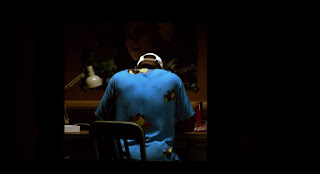
Opening shot is a long take, and extremely long for a music video. There are a full 33 seconds of instrumental introduction before the first lyrics actually start. This again is highly atypical of the hip hop genre. This initial shot positions the audience in an uncomfortable mode of address.

 The video makes explicit intertextual reference to the 1960 horror film Eyes Without A Face, directed by Georges Franju. Hip Hop videos often make intertextual references to films, but they tend to be more popular and well known. By referencing a cult classic, the video to Who Dat Boy reinforces it's outsider status.
Setting - Suburban America, with it's symbolic connotations of white middle class lifestyle. Again, atypical of the usual urban, deprived settings or luxurious settings typical of hip hop.
Extremely atypical editing, with very long takes functioning as enigma codes.
Orchestral instrumental introduction
Mise-en-scene of the Romeo + Juliet poster further reinforces representation of white, middle class lovestruck teenagers.
Structure - no clear narrative structure. An emphasis instead on horrifying imagery.
Editing - one long continuous take as Tyler moves to the front door, which is highly atypical of hip hop videos, which generally feature fast paced editing.
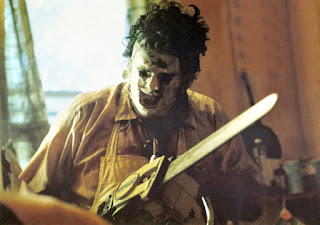 Intertextuality - Explicit reference to Tyler's song 911 Mr Lonely. Creates a stark binary opposition, with a sudden shift in genre and tone.
Intertextual reference to the Texas Chainsaw Massacre, in particular the iconography of the torn faces.
Birds eye extreme long shot tracking shot of Tyler's escape vehicle, before shock hard cut to a completely different location, off the beat. A frustrating, confusing and completely atypical way to 'end' the video.
 Representation of women - a complete absence of women. Highly atypical of hip hop! An example of symbolic annihilation.
Representation of ethnicity - By having a white person's face grafted on to his own, there is a definite intertextual reference to the concept of blackface. Demonstrates the inequality between black people and white people in America.
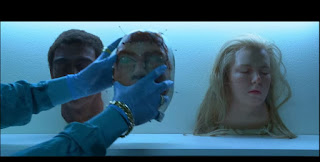 An oppositional reading could be that this is needlessly offensive. However, it could be that the dominant ideology is to offend the audience!
An exploration of the concept of white privilege, and police brutality
Debates - The video is deliberately offensive in many ways, from the use of grotesque imagery to the confusing narrative structure. This deliberately challenges audiences, and provides the target audience with the gratification of social interaction through the opportunity to discuss negotiated responses.
Preferred reading - to polarise the audience using deliberately transgressive imagery.
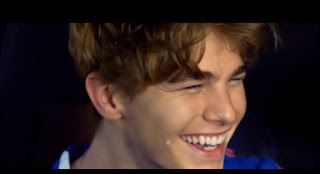
Hegemony - A stereotypical hegemonic representation of white people is constructed throughout this video. A stereotypical american white teenager, with fashionable hair, listening to black music. This reinforced through the stereotypically white setting, suburban, middle, white picket fences.
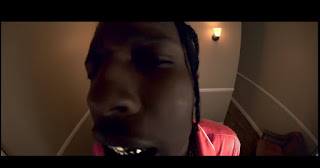
Fisheye lens zoom shot through the peep hole has definite voyeuristic qualities. As an audience we get to look in to ASAP Rocky's house.
Celebrity - Tyler discusses himself in third person, deliberately breaking the fourth wall by referring to himself and breaking conventional Todorovian narrative.
Promotion - All the clothes Tyler wears are his own clothing brand, Golf. Additionally his shoes are a collaboration with Converse. An example of synergy.
 Marketing - the controversial nature of the video, in particular the exploration of racist stereotypes could function as clickbait for audiences. Designed to entice the audience through it's gruesome subject matter.
Music videos - a synergistic convergence of music and film!
Regulation - The use of strong language throughout, including strong sexual language and frequent use of 'the N word'. Clearly would be unable to be played on commercial radio, though YouTube bypasses many of these issues through being self-regulated.
Genre
Horror conventions - many included in the video, for example CU shots of face being removed and the iconography of the stumbling 'zombie walk'.

Opening shot is a long take, and extremely long for a music video. There are a full 33 seconds of instrumental introduction before the first lyrics actually start. This again is highly atypical of the hip hop genre. This initial shot positions the audience in an uncomfortable mode of address.

 The video makes explicit intertextual reference to the 1960 horror film Eyes Without A Face, directed by Georges Franju. Hip Hop videos often make intertextual references to films, but they tend to be more popular and well known. By referencing a cult classic, the video to Who Dat Boy reinforces it's outsider status.
Setting - Suburban America, with it's symbolic connotations of white middle class lifestyle. Again, atypical of the usual urban, deprived settings or luxurious settings typical of hip hop.
Extremely atypical editing, with very long takes functioning as enigma codes.
Orchestral instrumental introduction
Mise-en-scene of the Romeo + Juliet poster further reinforces representation of white, middle class lovestruck teenagers.
Narrative
Structure - no clear narrative structure. An emphasis instead on horrifying imagery.
Editing - one long continuous take as Tyler moves to the front door, which is highly atypical of hip hop videos, which generally feature fast paced editing.
 Intertextuality - Explicit reference to Tyler's song 911 Mr Lonely. Creates a stark binary opposition, with a sudden shift in genre and tone.
Intertextual reference to the Texas Chainsaw Massacre, in particular the iconography of the torn faces.
Birds eye extreme long shot tracking shot of Tyler's escape vehicle, before shock hard cut to a completely different location, off the beat. A frustrating, confusing and completely atypical way to 'end' the video.
Representation
 Representation of women - a complete absence of women. Highly atypical of hip hop! An example of symbolic annihilation.
Representation of ethnicity - By having a white person's face grafted on to his own, there is a definite intertextual reference to the concept of blackface. Demonstrates the inequality between black people and white people in America.
 An oppositional reading could be that this is needlessly offensive. However, it could be that the dominant ideology is to offend the audience!
An exploration of the concept of white privilege, and police brutality
Audience
Debates - The video is deliberately offensive in many ways, from the use of grotesque imagery to the confusing narrative structure. This deliberately challenges audiences, and provides the target audience with the gratification of social interaction through the opportunity to discuss negotiated responses.
Preferred reading - to polarise the audience using deliberately transgressive imagery.

Hegemony - A stereotypical hegemonic representation of white people is constructed throughout this video. A stereotypical american white teenager, with fashionable hair, listening to black music. This reinforced through the stereotypically white setting, suburban, middle, white picket fences.
Fisheye lens zoom shot through the peep hole has definite voyeuristic qualities. As an audience we get to look in to ASAP Rocky's house.

Celebrity - Tyler discusses himself in third person, deliberately breaking the fourth wall by referring to himself and breaking conventional Todorovian narrative.
Industry
Promotion - All the clothes Tyler wears are his own clothing brand, Golf. Additionally his shoes are a collaboration with Converse. An example of synergy.
 Marketing - the controversial nature of the video, in particular the exploration of racist stereotypes could function as clickbait for audiences. Designed to entice the audience through it's gruesome subject matter.
Music videos - a synergistic convergence of music and film!
Regulation - The use of strong language throughout, including strong sexual language and frequent use of 'the N word'. Clearly would be unable to be played on commercial radio, though YouTube bypasses many of these issues through being self-regulated.
Monday, 23 April 2018
Blue Planet II - Targeting and positioning in the walrus scene
Targeting
The ways in which a text is constructed to attract its primary audience.
Eg: The selection of David Attenborough as a voiceover artist targets fans of nature documentaries and Attenborough himself
Blue Planet II targets a family audience. It does this by creating a double mode of address. For younger audiences, an approachable, family friendly narrative is presented. However, older audiences are targeted through the environmentalist ideology which is encoded throughout this scene.
Narrative
- A clear narrative is constructed, with a single mother struggles for a place for her baby to rest. The polar bears function as an antagonist, meaning that this scene has a very conventional and dramatic narrative structure
- Use of anthropomorphisation - "they make a bond that will last for the rest of their lives"
- "But who knows what will happen?"
Genre
- Very high production values will especially appeal to adult audience members. In particular, the long shot establishing montage creates a clear and powerful narrative.
Characters
- Low angled mid shot of mother walrus cradling baby, with natural lighting connoting her angelic, innocent status once more targets a family audience.
- "A herd of hundreds of quarrelsome mothers..." - an appealing characterisation for family audiences.
Language and mode of address
- Attenborough's lexis is simple, straightforward and approachable for younger audiences. No technical language is chosen.
- The use of the words 'our Blue Planet' connotes a sense of ownership and inclusion for the family audience, allowing them to identify with the alien situation.
Visual, technical and audio codes
- Establishing shot instantly reveals bleak setting, targeting young, environmentally conscious audiences
- C/U of sad, almost weeping walrus targets families through invoking empathy for an animal who is represented as being in a similar position. Functions as a powerful action code. Highly manipulative.
- Slomo shots of walruses emphasise not only the hardship of the lives of the walruses, but also emphasises their size. This targets a family audience, allowing the family to empathise and laugh with the walrus family.
Links to websites or social media interaction

- This scene proved particularly popular with social media users, and was live tweeted by many Twitter users. This demonstrates exactly how effectively targeted the young, social media using aduience was. You can check out a range of actual live Twitter responses here. They would be perfect sources for the exam!
Swathes of women across Britain right now wiping away tears and imagining themselves as mummy walrus #BLUEPLANET2 pic.twitter.com/oam2k33eNE
— Leah McDaniel (@LeahMcdaniel18) October 29, 2017
- Polysemic readings - multiple meanings -
Positioning
The ways in which a media text is constructed in order to place an audience in a particular relationship with the text
Eg: The emotive use of Attenborough’s voiceover forces the audience to identify with the plight of the walrus, positioning them in deliberately stressful situation
Preferred reading?
- Dramatic, non-diegetic soundtrack, composed by Hans Zimmer, emphasises that the polar bear is the antagonist. The music functions as a symbolic code, pointing out the bear as a villain. However, unconventionally, the text subverts the audiences expectations, instead positioning us with the polar bear. 'What is a mother to do'.
Direct mode of address
- 'our blue planet', again reinforces ownership, and positions the audience as being one with the animals featured on the show. It also suggests that we as an audience are at fault for putting the walruses in this situation.
Technical codes
- Establishing shot emphasises the disparity in size between the Arctic and the walruses, emphasising their comparative smallness and fragility
- Underwater midshop positions the audience with the walruses in an exciting and alien situation.
- C/U of walrus hugging child, anthropomorphisation, allowing audience to be positioned with the mother
- The final shot is a slow zoom out, zooming from extreme close up to an extreme long shot. This symbolises the eradication of the walruses habitat, positioning the audience in a voyeuristic perspective, watching the habitat slowly melt away.
- CU of walrus 'hugging' cub emphasises her status as a single parent. She physically struggles to push the cub on to the melting iceberg in a series of mid shots, emphasising that due to human action, her habitat is not sustainable. This also positions the audience with the struggles of a single parent family. ... "who knows what their further will be?"

Voyeurism
- Audience are positioned in an intimate and intensely emotional situation. The close knit community of the walruses is emphasised by a montage of close and mid shots.
Information
- Use of facts, '46% of the polar ice caps have melted' reinforces the hegemonic ideals of the producer. The dominant ideology is that we as an audience should look after and respect the environment.
- Ideologies and values
- Soft, emotional, peaceful music represents the arctic as isolated, beautiful and fragile
Thursday, 19 April 2018
Music video production talk with Ryd Cook
Ryd Cook - music video director, filmmaker, teacher, documentarian and former student! Ryd came in to talk to first year media studies about the process of planning, organising and creating music videos. The following are notes based on his excellent demonstration. You can follow him on:
Twitter - @rydcook
Instagram - @rydcook
You can also check out his website at rydcook.com
There are five steps to making a music video (we're really concentrating the first four steps here, but you will need to consider distribution for the magazine element)
0 - The Idea!!!!
Ryd recommends pursuing a career in being a camera person, runner, sound person or assistant direction if the filming itself is your favourite part of the production.
Typically, a band or artist will dictate the general theme of the video, but a director can still have creative control. It's about walking a line between what the director wants to do and what the band wants to do. In this situation, Ryd's initial idea was to make an experimental and performance based music video. In a meeting with the band, they discussed the meaning of the lyrics. Ryd suggests that for your coursework project, have complete creative control behind your own video!
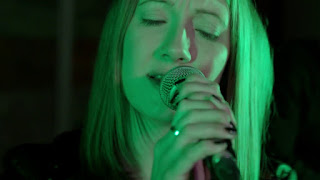
The song's theme is about pretence and being two-faced. The mise-en-scene of the frogs were suggested by the band. For this video, Ryd shot three different 'versions' of the band, demonstrating three different moods and lighting setups. The video to Compliments ended up being quite different to many of of the band's suggestions, with less 'frog shots' and so on.
It took a day to shoot, with a total of seven hours of shooting, for three and a half minutes. To organise this, Ryd had to meet the band, to contact people to edit and shoot the video. He also had to organise the location, the costume, the lighting setups, the additional props, and to make a plan for the shoot.
It's important to take inspiration from other people's music videos. 'Homage' is fine, 'copying' is not. But it's fine to be inspired by somebody! Look at the specific meaning of the song, by studying the lyrics and considering the mood. You can come up with your own meaning; your own interpretation is important!
Ryd knew he needed a stage, so he enquired at The Portland Arms at the bar as to if it would be possible. Ryd puts down the venue hire success to sending a really polite and nice email. Make sure you thank someone if you're asking for something! Make sure you say exactly what you want right at the top of the message or at the start of the conversation. In this situation, the venue got back quickly, and even gave a discount. One advantage of filming at the live venue was that Ryd was able to use the on-site lights. Always have a back-up plan: it's very possible that the venue or contact will just say no, so don't bank on anything! But make sure to point out the advantages of allowing you to film.
A planning document, for example a shooting schedule will be essential. If you plan stuff to the minute, it will make the process much easier. For the Compliments video, despite being fairly straightforward, NINETEEN separate takes and three different costumes setups were needed. So, make sure that you group everything by costume and lighting setups. Shoot all the wide shots together, shoot all the black and white closeups together. It's all about organisation!
 Make sure you schedule breaks for lunch. You should schedule to finish earlier than the final time you should be finishing, otherwise you might get kicked out of a venue etc.
Ryd decided to shoot in a single location so the audience can focus on the colours and the setups. A music video needs to grip the audience. However, Ryd encourages you to use multiple locations.
Setup takes a LONG time so make sure you factor it in! It can take hours. Lighting positions camera positions, band positions, experimenting with positioning, and in this case placing a large curtain over the 'Portland Arms' logo. The very first shot will always take the longest of all!
A cinematographer is in charge of everything to do with the camera. For smaller productions, this means she will be the camera operator too.
As a director, it helps to demonstrate dance moves, movements and directions. Remember, your 'band' will be performing to an empty room. It is absolutely essential that your band really gets in to the performance! If they look uncomfortable, your music video will suck. If in doubt, go nuts! It'll look good!
Even if you know that you're only going to be using a single location for a certain part of the song, Ryd's advice is to shoot the entire song for each location. You might end up filming something that looks great, even if you did not initially plan it!
The band or artist doesn't actually play the song live, but mimes to a backing track. It's a weird situation to be in. Drums can be tricky, because even when miming, they make a lot of noise! Miming can be surprisingly difficult. Keep an eye on the camera shots. For music videos, since sound will be added in post, you can talk to your performers as they are performing!
One big piece of advice; make sure everyone's happy. Provide people with snacks! Talk them through the process, and listen to any concerns. One of the most important roles for the director is to motivate the cast and to make them feel comfortable.
Music videos will have a significant amount of cuts, far more than other forms of media. So get the filming done as soon as possible, because the editing will take a significant amount of time.
 Ryd went through about five rough cuts before the final cut. Ryd suggests showing other people, not just the band. Use the feedback to redraft your cut. Don't get down about the feedback, but act on it. Editing is a long slow process. But it's exciting!
Ryd suggests starting to edit as soon as possible. With just nineteen takes, you can create millions of different versions. When editing, try not to stick to your original idea too much. You might change the concept completely!
The editing for this video took a few weeks, and this was with an experienced and effective editor. Music videos have far more intense editing processes than fiction films, and take a surprisingly long time.
Never have the band in with you when you're editing. They will try and change things. No one likes to look at themselves!
Colour correction is the final stage of production, it's essential to follow the order dictated by Premier Pro.
You must decide which type of video you want to make. Music videos can be one or more of the following, performance based, narrative based, completely abstract, or a combination of these types. Remember, when making your own music video for component three, you will need to have elements of performance and narrative, but it's totally up to you how you approach these! The following videos all demonstrate elements of narrative and performance.
 Use of male performer instead of the band's female vocalist subverts the expectation of the audience. Intense, emotional performance. An excellent performance is essential for an effective music video! An intense montage occurs towards the end of the video, creating a binary opposition between the slow paced editing of the start of the video. This synchronises with the sudden shift in pace of the track. For rock and indie music there tends to be less female singers, so for a band with a female singer to cast an effeminate man in the lead role questions gender stereotypes.
Additionally, the cinematography is particularly atypical and even challenging. The extreme close ups of mouths, clenched fists and the shifts in depth of field functions as a hermeneutic code for the audience
 A long, confrontationally quiet intro is extremely subversive of the function of music videos.After the slow narrative buildup, the 'punchline' of the screaming intensity of the hardcore punk song is a surprising binary for the audience. Demonstrates the importance in characterisation for narrative music videos
 A whimsical, tongue in cheek atmosphere is created through the use of period costumes and the elaborate mise-en-scene. A definite storyline, that makes frequent reference to the lyrics, so loosely linked. Construction of character archetypes. Ryd suggests that a narrative video needs the following:
Ryd suggests sitting in the boot of a rolling car for an effective dolly shot!
Beat matched analogue glitching and a collection of frankly atypical imagery. Grainy time lapse, suburban housing estates. Hard to grasp, with no conventional narrative. Lo-fi grain emphasises a rough and nasty aesthetic. Variation of shot length, some shots significantly longer than is conventional for a music video.
Twitter - @rydcook
Instagram - @rydcook
You can also check out his website at rydcook.com
The five steps of music video production
There are five steps to making a music video (we're really concentrating the first four steps here, but you will need to consider distribution for the magazine element)
0 - The Idea!!!!
1 - Development - including researching videos for inspiration
2 - Pre-production - storyboarding, location scouting, planning, mood boards
3 - Production - shooting the music video
4 - Post-production - editing, effects, mastering, VFX, SFX
5 - Distribution - essentially how the product makes it's way to the audience
Ryd recommends pursuing a career in being a camera person, runner, sound person or assistant direction if the filming itself is your favourite part of the production.
Shyer - Compliments

Typically, a band or artist will dictate the general theme of the video, but a director can still have creative control. It's about walking a line between what the director wants to do and what the band wants to do. In this situation, Ryd's initial idea was to make an experimental and performance based music video. In a meeting with the band, they discussed the meaning of the lyrics. Ryd suggests that for your coursework project, have complete creative control behind your own video!
The song's theme is about pretence and being two-faced. The mise-en-scene of the frogs were suggested by the band. For this video, Ryd shot three different 'versions' of the band, demonstrating three different moods and lighting setups. The video to Compliments ended up being quite different to many of of the band's suggestions, with less 'frog shots' and so on.
It took a day to shoot, with a total of seven hours of shooting, for three and a half minutes. To organise this, Ryd had to meet the band, to contact people to edit and shoot the video. He also had to organise the location, the costume, the lighting setups, the additional props, and to make a plan for the shoot.
Step one - development
It's important to take inspiration from other people's music videos. 'Homage' is fine, 'copying' is not. But it's fine to be inspired by somebody! Look at the specific meaning of the song, by studying the lyrics and considering the mood. You can come up with your own meaning; your own interpretation is important!
Step two - pre-production
Ryd knew he needed a stage, so he enquired at The Portland Arms at the bar as to if it would be possible. Ryd puts down the venue hire success to sending a really polite and nice email. Make sure you thank someone if you're asking for something! Make sure you say exactly what you want right at the top of the message or at the start of the conversation. In this situation, the venue got back quickly, and even gave a discount. One advantage of filming at the live venue was that Ryd was able to use the on-site lights. Always have a back-up plan: it's very possible that the venue or contact will just say no, so don't bank on anything! But make sure to point out the advantages of allowing you to film.
A planning document, for example a shooting schedule will be essential. If you plan stuff to the minute, it will make the process much easier. For the Compliments video, despite being fairly straightforward, NINETEEN separate takes and three different costumes setups were needed. So, make sure that you group everything by costume and lighting setups. Shoot all the wide shots together, shoot all the black and white closeups together. It's all about organisation!
 Make sure you schedule breaks for lunch. You should schedule to finish earlier than the final time you should be finishing, otherwise you might get kicked out of a venue etc.
Ryd decided to shoot in a single location so the audience can focus on the colours and the setups. A music video needs to grip the audience. However, Ryd encourages you to use multiple locations.
Step three - production
Setup takes a LONG time so make sure you factor it in! It can take hours. Lighting positions camera positions, band positions, experimenting with positioning, and in this case placing a large curtain over the 'Portland Arms' logo. The very first shot will always take the longest of all!
A cinematographer is in charge of everything to do with the camera. For smaller productions, this means she will be the camera operator too.
As a director, it helps to demonstrate dance moves, movements and directions. Remember, your 'band' will be performing to an empty room. It is absolutely essential that your band really gets in to the performance! If they look uncomfortable, your music video will suck. If in doubt, go nuts! It'll look good!
Even if you know that you're only going to be using a single location for a certain part of the song, Ryd's advice is to shoot the entire song for each location. You might end up filming something that looks great, even if you did not initially plan it!
The band or artist doesn't actually play the song live, but mimes to a backing track. It's a weird situation to be in. Drums can be tricky, because even when miming, they make a lot of noise! Miming can be surprisingly difficult. Keep an eye on the camera shots. For music videos, since sound will be added in post, you can talk to your performers as they are performing!
One big piece of advice; make sure everyone's happy. Provide people with snacks! Talk them through the process, and listen to any concerns. One of the most important roles for the director is to motivate the cast and to make them feel comfortable.
Step four - post-production
Music videos will have a significant amount of cuts, far more than other forms of media. So get the filming done as soon as possible, because the editing will take a significant amount of time.
 Ryd went through about five rough cuts before the final cut. Ryd suggests showing other people, not just the band. Use the feedback to redraft your cut. Don't get down about the feedback, but act on it. Editing is a long slow process. But it's exciting!
Ryd suggests starting to edit as soon as possible. With just nineteen takes, you can create millions of different versions. When editing, try not to stick to your original idea too much. You might change the concept completely!
The editing for this video took a few weeks, and this was with an experienced and effective editor. Music videos have far more intense editing processes than fiction films, and take a surprisingly long time.
Never have the band in with you when you're editing. They will try and change things. No one likes to look at themselves!
Colour correction - where shots are matched to make them look the same. This is especially important if the weather changes or if you shoot the same scene at different times of day.
Colour grading - where the overall look of the film or video is shifted to change the feel of product.
Colour correction is the final stage of production, it's essential to follow the order dictated by Premier Pro.
Types of music video
You must decide which type of video you want to make. Music videos can be one or more of the following, performance based, narrative based, completely abstract, or a combination of these types. Remember, when making your own music video for component three, you will need to have elements of performance and narrative, but it's totally up to you how you approach these! The following videos all demonstrate elements of narrative and performance.
Performance type - Wolf Alice - Blush
 Use of male performer instead of the band's female vocalist subverts the expectation of the audience. Intense, emotional performance. An excellent performance is essential for an effective music video! An intense montage occurs towards the end of the video, creating a binary opposition between the slow paced editing of the start of the video. This synchronises with the sudden shift in pace of the track. For rock and indie music there tends to be less female singers, so for a band with a female singer to cast an effeminate man in the lead role questions gender stereotypes.
Additionally, the cinematography is particularly atypical and even challenging. The extreme close ups of mouths, clenched fists and the shifts in depth of field functions as a hermeneutic code for the audience
Narrative type - The Armed - Paradise Day
 A long, confrontationally quiet intro is extremely subversive of the function of music videos.After the slow narrative buildup, the 'punchline' of the screaming intensity of the hardcore punk song is a surprising binary for the audience. Demonstrates the importance in characterisation for narrative music videos
Narrative type - Tellison - Freud Links The Teeth And The Heart
 A whimsical, tongue in cheek atmosphere is created through the use of period costumes and the elaborate mise-en-scene. A definite storyline, that makes frequent reference to the lyrics, so loosely linked. Construction of character archetypes. Ryd suggests that a narrative video needs the following:
- A protagonist - in this case the bearded man
- A goal for the protagonist to accomplish - in this case getting a lovely dentist to go out with him
- A resolution - in this case the bearded man's failure
Ryd suggests sitting in the boot of a rolling car for an effective dolly shot!
 Experimental type - Aphex Twin - 4 - fan made by David Firth

Beat matched analogue glitching and a collection of frankly atypical imagery. Grainy time lapse, suburban housing estates. Hard to grasp, with no conventional narrative. Lo-fi grain emphasises a rough and nasty aesthetic. Variation of shot length, some shots significantly longer than is conventional for a music video.
Subscribe to:
Posts (Atom)