
Showing posts with label Media Language. Show all posts
Showing posts with label Media Language. Show all posts
Tuesday, 13 December 2022
Monday, 12 December 2022
Subverting representations of women - Julie
Les Revenants = 'the returned'
In the exam, Les Revenants will be referred to as The Returned. But we refer to it as Les Revenants.
Why?
- It’s more authentic and more academic
- It sounds more sophisticated
- The Returned is a wildly unpopular American remake of Les Revenants. The less we talk about this, the better
Recap
Last time we explored the representation of teenage girls. The French for ‘orgasm’ is ‘le petit mort’, which is a reference to the fact that every time we make love, we are one step closer to death . Life and death is the ultimate binary opposition, and is a fascinating and philosophical contradiction. This difficult and problematic binary opposition presents teenage girls as rebellious, irrational. To be a teenager is exciting, scary, and terrifying.
What other groups are represented in Les Revs?
- Mothers (Claire)
- Middle aged women (Claire)
- Middle aged men (Camille’s dad)
- Teenage boys (hat guy)
- Young children - Victor
- Parents - The Suerats
- Elderly people - Mr Costa
- Women - Julie
What Makes Le Revs 'French'
This is a bit weird to try and say, but Les Revs is really really French. It presents a stereotypical French mode of address for a French audience. This is highly similar to how Humans uses stereotypically British characters, dialogue and settings to appeal to a British audience, and how Real Humans uses Swedish stereotypes to engage a Swedish audience. But what makes Les Revs 'French'?
- French Setting
- Set in the French Alps, a setting that would only be relevant to French audiences
- In French
- Dark, dismal moody setting
- Themes: death, depression, philosophy
- Stereotypically French actors
- Architecture: the Seurat family’s house has an Alpine feel
Explore how the TV shows you have studied construct representations of gender. Make reference to Humans and Les Revenants in your response

Gender performativity - Judith Butler - gender is a social construct, and the way in which we perform gender constructs the world around us
Stuart Hall - theories of representation: stereotypes and their function
Liesbet van Zoonen - representation of women - women in media products have a completely different function to men, often for pure sex appeal
Introducing Julie - how is Julie’s representation constructed through media language?
- Establishing shot of Julies flat shows that she lives in social housing, and is therefore working class
- The setting of Julie’s flat is run down and empty.
- The use of low key lighting constructs ideologies of loneliness and isolation
- This is further anchored through the cluttered, messy mise en scene of her apartment, which is typified by stacks pf books, magazines, and other objects
- The cluttered nature of the apartment represents Julie as disorganised and untidy, which is a highly unconventional representation of women
- The MES of books also functions as a symbolic code for Julie being an intellectual character
- Julie’s costume is baggy, casual and understated. Dressed in dark colours she is rather atypical in her representation.
- Julie, through her hair and costume and lack of makeup, is not coded as being hegemonically attractive
- Julie is watching The Texas Chainsaw Massacre, an intertextual reference to a notoriously violent slasher film. This constructs Julie as being edgy, fearless, and different from stereotypical women
- Julie is a highly complicated representation of women! While her representation is highly relatable and even ‘realistic’, it is not a commonly seen representation in commercial TV
- External establishing long shot of a gritty, concrete apartment block. This has a symbolic connotation, connotations of crime, danger, violence. Julie clearly is a rough and dangerous
- Julie is stereotypically working class. She lives in a social housing block, which forms a stark binary opposition to the Seurat family
- The Mise en scene of the set design of Julie’s apartment is lit through low key lighting , and her apartment is littered with stacks of books . This symbolically encodes that julie is educated, and messy
- Julie’s costume comprises of a baggy jumper and baggy jeans, and has connotations of comfiness and relaxation.
- Despite her costume being highly realtle to the target audience, it is in fact a subversive representation of women . It completely contrasts with Liesbet Van Zoonen’s theory that women in media products are presented purely for the purpose of sexualisation
- Julie is watching The Texas Chainsaw Massacre, a violent slasher horror film that features the torture and torment of many female characters. Julie’s bored reaction to this extremely violent film constructs a highly atypical representation. Not only does Julie not subscribe to gender norms and genre norms are also broken
Julie and Victor come home
- The non diegetic soundtrack is creepy, eerie, and highly typical of horror films
- This entire montage is highly conventional of the slasher genre
- Slow, POV MS of her face as she gets off the bus positions the audience with julie , and allows the audience to to see things from Julie’s perspective
- MES of extreme low key lighting throughout these scene connotes mystery and loneliness
- The light is yellow, dull, menacing and artificial, which has symbolic connotations of fear and misery
- This is further anchored through the completely empty, run down suburban setting, concrete blocks of flats and overgrown weeds is symbolic of crime and danger. This highly stereotypical mode of address will resonate with audiences
- Julie’s performance is highly atypical. Rather than being scared of her isolation, she appears to be bored. Additionally, by not being attacked, julie breaks this stereotype of women being vulnerable
- The character Julie presents a highly complex representation of women that demonstrates the ideological perspective of the producer. She is represented most effectively in the montage of scenes that introducts
- Victor is establishes through a series of highly isolating shots. A high angled extreme long shot of victor is presented from Julie’s perspective, which positions the audience with Julie. This action reinforces Julie’s caring persona, and the idea that she is secretly protective of those around her
- The low key used throughout this montage is highly stereotypical of the horror genre, which positions Julie is a dangerous and threatening situation.
- The lighting is low key, and comes from a lonely bus the light from the bus shelter. This artificial light take s on a sickly yellow quality, which gives the light a cheap, nasty, and threatening quality. This reinforces the stereotypical danger than Julie faces
- Julie’s actions reinforce however that she is clearly unafraid of this situation. This constructs a highly atypical representation of women for the target audience. This confusing and atypical subversion of genre expectations may make the target audience feel uncomfortable and even creeped out. Why is isn’t Julie more scared, and why isn't she behaving like women stereotypically would in this situation???
- However, the soundtrack, which combines a thrumming bass noise with eerie sound effects, which is highly typical of the horror genre. Additionally, the iconography of a creepy child all by himself
Sunday, 11 December 2022
Considering the representation of Camille and Lena
In what ways is age represented in the TV shows that you have studied?
In what ways does this scene construct an uncomfortable mode of address, and what message does this construct about teenage girls?
 |
| Les Revenants uses fantasy and horror conventions to emphasise and to allegorically draw attention to the issues that young women may face |
Representation refers to how something is re-presented by the producer of a media product using media language to reflect their own ideology. Therefore, when a producer choses to re-present middle class teenage girls, they are not strictly re-creating reality, but instead are reinforcing and re-presenting certain ideologies about teenage girls. This process is extremely complicated, and must be analysed in detail.
Representations construct reality. They reinforce and communicate to audiences what something ‘should’ look like, or how someone ‘should’ behave’.
One way in which teenage girls is represented in Les Revenants is through the deliberately uncomfortable and potentially problematic final sex/death scene.
- A close up birds eye view shot is shown for an extended period of time, deliberately positioning the audience not as a casual observer, but in the bedroom, right next to the couple as they have sex. This uncomfortable mode of address is anchored through the lack of musical/non-diegetic soundtrack, forcing the audience to confront the sounds of the couple. This is further emphasised through the characters whispering loudly, again positioning the target audience in an intrusive and intimate mode of address. Finally, this is yet further anchored through the deeply off-putting dialogue from Lena, as she discusses her resemblance to her twin sister during sex.
- Awkward performance
- The MES of the hat...
What message about teenagers is being constructed through media language in this scene?
While the scene is highly uncomfortable and highly atypical in terms of how it represents sex, it arguably represents teenagers in a stereotypical way. Lena is represented as being rebellious and independent. We are positioned with her rather than her lover in this scene, which is highly relatable to the secondary teenage female audience. It reinforces a not often seen stereotype that sex is often awkward, especially if it's for the first time.
However, it also reinforces a further ideological perspective, that sex is dangerous as has hidden implications. Throughout this scene, we cross cut from the Sexually active, rebellious Lena to the stereotypically innocent Camille.
In cross cutting between this two highly dichotomous scenes, a binary opposition in constructed between life and death. Sex is typically symbolic of reproduction, as in creating new life. However, this scene presents an ironic symbolic code, where sex instead is symbolic of death. A symbolic bond is constructed between these two sisters which constructs a highly confusing and upsetting mode of address for the target audience, which reinforces a stereotypical representation of the confusion and upsetting nature of being a teenager
How does this scene position it’s audiences? What is the intended response?
- The sex scene positions the audience in a deeply uncomfortable mode of address. This is constructed through a variety of different ways:
- The apparent age of the characters is very young. Lena (the character) is 14 years old, which may mean that some audiences may feel uncomfortable by this.
- The use of close up BEV shots position the audience literally on top of the young couple as they have sex, which again is a deliberately uncomfortable mode of address
- A highly voyeuristic mode of address, where the audience are essentially seeing something that they shouldn’t see
- The MES of the duvet completely obscures the audiences vision, and heightens the voyeuristic mode of address. Additionally the performance is very innocent, awkward and naïve
- Lena makes explicit reference to her own sister in bed, which is highly innapropriate, and a little creepy
- The pleonastic sound of the characters whispering construct a deeply voyeuristic, intimate and off putting mode of address for the target audience.
- Ultimately this sex scene is potentially relatable for teenage audiences, who may be going through similar things
- Lena loses her virginity in this scene. To loose one’s virginity is symbolic of losing one’s innocence, and in this scene, this is symbolically occurring with both Lena and Camille.
- Le petit mort - the little death. This oxymoronic term is confusing considering one ‘function’ of sex is to create life. It could refer to the death of one’s childhood and innocence, and the vulnerability that one has in such in a situation.
- However, Camille, experiencing what her sister experiences, has a violent panic attack in confusion, and ultimately this Camille and all her friends.
- This scene makes a profound and symbolic comment on what it is like to be a teenager. It is uncomfortable, strange, awkward, scary, terrifying and confusing
Tuesday, 6 December 2022
Les Revenants initial discussion
The following notes were pulled from two different classes as a starter activity. As ever, if there's repetition, this means it's a good point worth making twice!
- The link between Lena and Camille is bizarre! Camille essentially crashes a bus killing everybody because her sister has an orgasm
- Les Revs is an extremely unconventional show!
- But what genre is Les Revs? A drama? A zombie horror??? Is Camille a Zombie?
- Use of soundtrack: eerie soundtrack
- A highly confusing narrative featuring a range of different characters. A flexi narrative or multi strand narrative
- A deliberately confusing narrative that forces us to engage with the topic of death
- An extremely confusing use of time and space deliberately positions the target audience in a confusing mode of address, and will lead to confusion as to the relationship between Lena and Camille (actually twin sisters!)
- The use of long takes: continuous shots with no editing create a deliberately slow and awkward pace
- The narrative is highly unorthodox. There is not traditional typical build up to the bus crashing off the cliff, and this is potentially very unsatisfying to the target audience
- The final sex scene takes place between two 15 year olds having sex, which is below the age of consent in the UK. However, this scene clearly does not breach any UK guidelines, beyond offending certain audiences. This scene clearly reflects the differences in values between France and The UK
- The aesthetic: very dark, very gloomy
- The show is set not in Paris or a major city as the audience might expect , but instead in the French ALPS, deep in the countryside
- Metaphysical: something beyond the physical realm and our understanding
- The concept of death itself is broken in this TV show, which constructs a highly confusing mode of address for the target audience
- Les revenants is a mysterious show. It makes extensive use of hermeneutic codes to position the audience in an inquisitive
- The entire show is completely predicated on hermeneutic codes. It is reliant on them to an extreme degree, as many of the mysteries never get resolved?
- For example:
- how did Camille come back to life?
- Why is it so jarring? This isn’t normal?
- How isn’t Camille eating anyone’s brains
- What are our expectations of this show? Because it is targeting a niche audience, it is very likely that audiences that stumble across this show rather than seeing advertising for it for example.
- Audiences may choose to watch this show because of the music, which was composed by a band called Mogwai, an instrumental rock band from Glasgow. But why did they do the soundtrack? It acts as a unique selling point, and allows the show to target a pre-sold audience. Their music is also loud and mysterious, which suits the theme and the aesthetic of the show
- It’s very creepy! The central theme is quite horrifying! Camille coming back from the dead, not as a zombie but as an identical girl to how she died is extremely unsettling to the audience. It completely subverts our expectations of the zombie genre, as none of the zombies/les revenants seem to be in any way aware of what’s going on, which is highly creepy, in a far more subtle way
- Deeply confusing narrative can be completely off putting to the audience, leaving them confused, overwhelmed, and even bored
- The narrative is actually extremely straightforward, and for much of the episode, characters act in an off putting and emotionless way, which can be pretty distancing for certain audiences
- A focus on ‘normal’ and relatable people. There is no struggle for life, there is no barricading in a house. In fact, ‘normal’ and relatable things happen, such as having sex, picking up guys, trying to find a house, and grieving over the death of a daughter.
- However, there are two moments of shocking violence in this episode, including a scene where Mr Costa ties up and burns alive Mme costa, the bridge suicide, and the waitress being stabbed to death in the underpass.
- Les Revenants is highly atypical in every conceivable way

Wednesday, 30 November 2022
Les Revenants: considering genre
Starting with the conclusion: Les Revenants is atypical
In this absolutely bizarre scene, Claire is absolutely terrified by her long dead daughter Camille seemingly returning from the grave. However, Camille to have no idea what has happened. This engrossing scene captures the appeal of Les Revenants, an arguably fascinating show that expertly blends expectations of genre with a highly confusing and involving family drama

By now you will have watched the first episode of the French TV thriller/horror/zombie/drama/tragic romance/surreal/whatever show Les Revenants (AKA The Returned). Les Revs is very very different from the other TV show we have studied (which is either Humans if you are taking the exam in 2023 or Black Mirror if you are taking the exam in 2024 and beyond. In fact, we can take a second right now to present a specific and straightforward argument that you will use in the final exam:
Les Revenants is highly atypical
or
Les Revenants is particularly subversive
or
Les Revenants is extremely unconventional
So if you found Les Revenants difficult, impenetrable, weird, confusing, subversive or just plain odd, then good! Your argument will be that this show clearly does things different. How and why are the questions we need to answer here.
Les Revenants is extremely unconventional in terms of generic conventions
Most of the things we have looked at so far, with the exception of Adbusters have been extremely conventional in terms of genre. However, it is clear the Les Revenants is very unconventional in terms of genre. It doesn't really fit clearly in to one genre.
Task 1: generic conventions
Below are a number of genres and subgenres that Les Revs could fit in to. This is all highly debatable. For each of these, make a list of conventional elements and unconventional elements. These should all be related to the textual analysis toolkit, for example shot types, camera angles and so on. Please use the episode itself as guidance for this task.
Genre: Horror
Subgenres: psychological horror, zombie, supernatural horror, folk horror
Genre: Drama
Subgenres: thriller, psychological thriller, soap opera, romantic tragedy, paranormal romance
Examples:
Psychological horror: themes of madness and confusion are encoded through the use of long takes, and through the isolated and nightmarish setting. Further examples include...
Psychological thriller: The use of over the top performances, particularly in the scene when Lena is reunited with Camille emphasise the intense psychological trauma experienced by the main characters. This is further anchored through...
Les Revenant is extremely unconventional in terms of narrative
Task 2 - what narrative techniques does Les Revenants utilise
Consider the following narrative techniques, and explain to what extent Les Revenants uses these elements. Remember to check the glossary (or just google) if there's anything you need a refresher on!
- Todorovian equilibrium
- Multi-strand/flexi-narratives
- Character arcs
Les Revenants is unconventional with it's cinematography
Let's tie together the elements of cinematography and narrative with editing.
Task 3 - watch the scene where Camille comes home
This is the scene where Camille returns to the Seurat family household and meets with her mum. A very alienating, confusing, and potentially satisfying scene is played out, making full use of a variety of different elements of media language. But what does it mean? Why is Claire freaking out? Why is Camille so chilled? And how can we make sense of this scene?
Task 4 - watch this video
And make notes on how the 'Camille comes home' scene creates meaning for the target audience.... whoever that may be!
Tuesday, 29 November 2022
Political ideology
Introduction: lets make this political
Ideology refers to the beliefs and values of the producer of a media product. But it also refers to our own beliefs and values.
Politics refers to how power is distributed. When we say 'politics', we tend to think of government, politicians, and world leaders like Emanuel Macron, Joe Biden and Liz Truss I mean Rishi Sunak.
For some people, EVERYTHING is political, as everything is about power and its exchange. For example public transport is political, as it reflects a decision as to how easily certain people can and cannot move freely. Videogames are political, as they reflect certain ideologies about sex and violence, and this can be reflected in society. When we think like this, the world becomes very complicated, and even scary.
For other people, NOTHING should be political. Games should just be games, books should just be books, and things like gender and race should be less important. You might have heard the phrase: "let's not make this political". When we think like this, the world becomes very straightforward.
For media studies, we are more likely to assume that everything is political. This is because, at it's heart, media studies is the study of power, who has this power, and how it gets distributed. One aspect of media studies that is unarguably political, however, are newspapers, which always demonstrate a political ideology, and therefore always demonstrate a political bias.
Bias - to favour one perspective, opinion
Types of bias
Bias through selection - where a particular story, image or source is used to reinforce a certain ideology
Bias through omission - where a particular story, image or source is NOT used, to reinforce a certain ideology
 |
| This handy guide represents the political ideologies of many of the major UK newspapers. Of course, this is completely up to interpretation, but generally I think it's spot on! Image via Nathan Gamester |
Researching the difference between left and right wing politics
You may have heard these terms before, but what do they actually mean? Well, you are going to use the internet to find out!
Task 1: make two headings: right wing and left wing, and make notes about what these could mean underneath them.
BUT: this task is filled with difficulty. Why? Because every media product, and every person is biased. Yes, this includes me. It is absolutely impossible to avoid bias. So please, look at several sources when completing your research.
By way if example, here's how my father in law explained right and left wing policy to his children when they were young:

"If you worked really hard for your money, would you just give it to someone who hadn't worked at all for it? Let's say you were on a desert island. You work really hard to make a hut and a running water supply. You grow crops and make a toilet. But this other guy lazes around and does nothing. Should he get to use your hut? No. That's why I'm right wing"
This is a pretty unhelpful analogy, even if it is very simple. It is extremely specific and is related to an imagined society of two people rather than 70 million. But most of all, it is deliberately emotive, and is designed to accept one answer. "Yes, I would let the bad man live in my hut" is clearly the wrong answer. In general, simple analogies like this tell us absolutely nothing about our world. A similar example might be "Rishi Sunak is literally Hitler". This is also simple, straightforward, emotive, and means that if you argue against it, you are probably a Nazi.
This type of argument is called a 'persuasive definition'. You cannot disagree with it without looking like a fool. It's a terrible way to make an argument, as it is made to deliberately wind up the recipient
However, newspapers use biased and emotive ideological perspectives like this all the time
Bias in action 1

The above page was published on the night of a general election between Teresa May's conservative government and Jeremy Corbyn's labour government. It is probably the most open and extreme example of political bias ever seen in a UK newspaper.
Task 2 - use the textual analysis toolkit to answer the below questions
- What techniques are used to construct representations in this front page?
- How does the front page utilise both bias through selection and bias through omission? How do you know?
- How does this newspaper use 'persuasive definitions'? What are you if you disagree with the ideology of the newspaper?
- Why is this newspaper being so blatant with it's ideology? What is it trying to achieve? AND WHY?
Bias in action 2

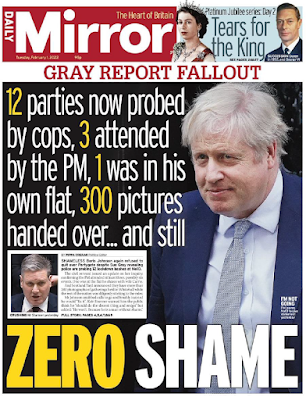
You're probably really familiar with the above image. If you are sitting the exam in 2024 and beyond, you will be expected to make reference to this front page!
So, exactly the same:
Task 3 - use the textual analysis toolkit to answer the below questions
- What techniques are used to construct representations in this front page?
- How does the front page utilise both bias through selection and bias through omission? How do you know?
- How does this newspaper use 'persuasive definitions'? What are you if you disagree with the ideology of the newspaper?
- Why is this newspaper being so blatant with it's ideology? What is it trying to achieve? AND WHY?
What is your own ideology?
You might have a clear idea of your ideology. You might not. You might not care. But ideology, and politics influences every aspect of your life, weather you chose to think about it or not.
I Stand With is a comprehensive online tool that lets you answer a number of questions, and then will tell you which UK political party best suits your ideology, based on their own manifestos (which are essentially a list of promises that parties make if they are to get voted in. Whether or not they actually do these things is another story!)
There are some difficult questions on here, and you can click to get more information. Remember, that every definition is potentially biased, and even something like I Stand With, which broadly seems legit, is swimming with bias. But it's a good starting point.
Task 4 - what political ideology are you? Take this quiz to find out!
Thursday, 24 November 2022
Exploring the ideological implications of newspaper mastheads
.png)
The selection of font is suggestive of a middle class target audience. It is very fancy, and very serif, which has connotations of wealth and luxury. However, it also is heavily connotative of Germanic font, and clearly has significant historical allusions. This reference to established history anchor's the Daily Telegraph's perceived quality and status as an authority. The word 'telegraph' is a highly old fashioned word for communication, which suggests not only the authority and reliability of this established newspaper, it also makes clear the newspaper's traditional and conservative values
Conservative - straight laced, potentially wealthy, privileged, and highly resistant to change

Basic font, basic of colour, suggests a working class target audience. A basic audience? Red has connotations of sexual passion, bold, blood (!?), gossip and excitement. Use of the term 'star' has connotations of celebrity, and this reinforces the gossipy potential of the colour red. The font makes intertextual reference to comic book fonts. The basic, comic book font could suggest the reading age of the target audience is low, which makes this newspaper appealing to less educated working class adult audiences.
.png)
Light blue background has connotations of innocence, fun and positivity. Blue and white are also the colours of the Israeli flag, a country that will be important to many British Jewish people. Simple and straightforward, which suggests a simple and straightforward subject matter. The use of the term 'Jewish' indicates a specific Jewish target audience. However, the sans serif font is bright and inclusive.
Mass media - media that is made available to the widest possible audience. Radio is an excellent example of mass media
.png)
A tabloid newspaper - A smaller format newspaper that traditionally has less writing, more images, simple lexis, use of slang, traditionally targets a working class audience. Cheaper.
Simplistic sans serif masthead connotes a simplistic and straightforward read. Sans serif is informal, and may appeal to slightly younger and less educated audiences. Takes an assumption the target audience are less educated. The masthead communicates that it is easily readable even to a less educated audience, which may make the audience feel included and intelligent. Italic font could infer fun, importance or simply make the masthead stand out. Bright, positive, fun connotations of the word 'sun'

Navy blue backdrop infers a more formal mode of address. Serif typeface anchors it's formal nature, and suggests a well respected news source. Dark blue has connotations of royalty and luxury. Potentially slightly younger target audience, and the font also infers a more modern perspective
Broadsheet - Traditionally a larger paper, with less focus on images and a more complex lexis, appeals to a highly educated middle class audience. Much more expensive.
Friday, 18 November 2022
Applying postmodern theory to Humans
Jean Baudrillard – theories surrounding postmodernism
 |
| Odi is a hyperreal construct. To George, he is far more real than anything else in his life. But is this in spite of, or because of how irreparably broken he is? Does Odi and George's intense and subversive relationship reflect a breakdown in societal values? Why does George love Odi so much? What is real, and does it matter? |
This 'theory' is extremely difficult to define, as it's an 'anti-theory' theory. So things are going to get very complicated very quickly. Luckily, postmodernism as a critical approach is often applied in a loose way, so don't worry too much about how you apply it in your written work.
Concept one – it is impossible to objectively define what is real. Therefore, there is no such thing as reality
Concept two – we live in an age where there is more and more information, and less and less meaning
Concept three – Since all forms of meaning have collapsed, media products reflect ideologies and messages that have never even existed in the first place
Hyperreality
Hyperreality - where the representation is more real that the thing that is represented
Baudrillard argued that we are increasingly unable to differentiate between what is real and what is not, but this does not matter, as there is no quantifiable, objective reality
Examples of hyperreality
- Instagram accounts of famous models, for example Kylie Jenner and Bella Hadid generally feature highly editing, 'perfect' reconstructions of reality, that are far more interesting than how they actually live their lives. Audiences are absolutely aware that Jenner is a hyperreal construct, and is 'fake' or not real... but we don't care! This is because the world is so complicated that we have absolutely no idea what is actually going on anymore, and it is preferable to simply accept the surface value of representations. The fake is BETTER than reality.
- News headlines and reportage of big stories, often reduce difficult situations to more easily digestible examples
- Advertisements: chocolate bars, for example Lindt chocolate sell an exciting sexual lifestyle that goes beyond the simple act of eating chocolate
- Makeup, clothing, brands, products, all promise to transform us in to something completely different
What examples of hyperreality are evident in the breakfast scene?
Sophie - "is this a party?"
Joe - "No Soph, this is what breakfast is supposed to be like!"
But what is breakfast 'supposed' to look like? For one thing, the whole family are eating together
The family are surrounded by a number of different options, including the MES of teapots, a range of cutlery, toast in a toast rack, and little pots of jam and milk. It resembles a breakfast at a hotel rather than a 'real' breakfast at home. When Joe says 'this is what breakfast is supposed to be like', he is making reference to breakfast scenes on TV and in adverts.
The Hawkins family themselves are a stereotypical ,hyperreal and traditional white middle class family. They resemble other stereotypical white middle class groups, such as in Friends, Home Alone, Modern Family, My Family, Outnumbered, and many more examples. They fulfil every hegemonic norm and expectation. Even if you are from a white, middle class, nuclear family, it is frankly very unlikely you live in a similar manner to the Hawkins family. Yet, despite not resembling the vast majority of even white middle class families, they still seem more real through their familiarity. The audience not only suspend their disbelief, but simply accept this contradiction.
Anita as a hyperreal construct
Anita herself is a hyperreal representation. She is absolutely perfect. What makes her perfect?
- Symmetrical facial features
- Well spoken
- She is very tall
- Her movements are soft and graceful
- She is emotionless
- She laughs when she is told to
- She is controllable
- She does what you tell her
- She is subservient
- She is submissive
- She is conservative
- She doesn't need to eat or drink
But these ideas of 'perfection' are highly problematic! Anita resembles a hyperreal hegemonic approximation not of a real woman, but of a simulacrum of a 1950s British housewife
The collapse of meaning
Baudrillard argued that we live in a world with more and more information and less and less meaning. This is a concept that has become more apparent since his death.
The news cycle is engineered to be highly stressful and extremely confusing, with a number of highly contradictory stories. On any given day, themes of nuclear annihilation, economic collapse, and political manipulation are combined with stories about football, celebrity gameshows, and how thin Bela Hadid is. This extremely confusing mode of address instigate feeling of depression, misery, anxiety, resignation and confusion. The news cycle could be argued to be a form of social control. By presenting such a confusing, misleading and highly inflammatory set of contradictory narratives, audiences are simply so confused that they slip in to other media products, and escape in to less stressful situations. The world in which we live in has been structured in such a way that it is impossible to understand.
 |
| The main news headlines from The Mail Online, 16th November 2022. A highly confusing and contradictory mess of information is presented to the audience |
How are themes of confusion, anxiety and paranoia encoded in Humans?
- Laura is anxious and paranoid about being replaced as both a mother and a Lover, by Anita, a perfect, fake human. This could symbolise the collapse of the metanarrative of marriage, and traditional values that generally state we should remain with one partner
- Matty has completely lost all motivation, as traditional metanarratives of work and employment have been replaced. Increasingly, even highly skilled jobs can be carried out by robots and artificial intelligence. Traditional jobs, such as security guards, flight attendants, mail people, factory workers, media studies teachers, artists replaced with artificial intelligence
- Many of the human characters have found it hard to adjust to robots just existing. Laura refuses to get one, and inspector Drummond is highly critical of his wife's rehabilitation synth.
- Laura gets very defensive: it's just a robot, she isn't your friend. "you're just a stupid machine, aren't you?" Constructs a 'them and us' situation
- George is highly critical of the police and the government for interfering with his private life with Odi. The MES of George's DON'T RING/NO VISITORS sign indicates his preference for isolation
- Leo has had his friends and lovers stolen from him, and he is desperately trying to get them back
- Leo is going through a significant identity crisis. He is not human. Or is he? He is half robot, and has essentially been bought back to life through technology. In many ways he should not exist, which adds to the confusing nature of the show
- The use of low key lighting throughout the show encodes a sense of paranoia
- Laura has a significant fear of being replaced by Anita. She is terrified of her role as a mother being replaced by Anita. Previously, she cleaned the house, read stories and cooked for her children. All these aspects have now been taken away from her.
- Themes of the singularity. Matty is absolutely dejected by the idea of the singularity. She has completely given up, because artificial intelligence will take any job that she applies for. Her future is completely uncertain, and frankly pointless
Key scene - breakfast
- While the breakfast scene may seem on the surface to be nothing but comic relief, the escapist hyperreal fantasy it offers presents deeply rooted themes of anxiety, distrust and depression, which are fundamental to the postmodern condition.
- The mid-shot reaction shot of Anita's laughing at Joe's performatively terrible joke anchors and emphasises the creepy and robotic nature of this laugh. This laugh has been digitally looped in post production to further emphasises her robotic nature, and the simple fact that she does not exist. This is further anchored through a montage of mid-shots of the increasingly confused reactions of the Hawkins family, followed by absolute silence, which constructs an awkward and uncomfortable binary opposition.
- Laura is clearly highly irritated by Anita's presence, at one stage shouting "for God's sake, that's already clean, just sit down'. This exasperated outburst is further anchored through the gesture of her hand being held up to her face in resignation
- Joe's attempt at a joke is clearly an attempt to distract from a toxic situation
- After referring to Anita as a 'dishwasher', Matty admonishes Toby with the line "because we can't guess why you like her so much , crusty sheets'. Matty realises and is disgusted by Toby's sexual desire for Anita, and by bringing up his masturbation in front of his family, is desperately trying to upset toby. This is symbolic of a collapse of the traditional nuclear family, and deliberately breaches sexual taboos
Key scene - the brothel
- The montage of Leo walking down the narrow of the brothel draws attention to the MES of the building itself. The tight corridors function as a hermeneutic code, constructing a powerful sense of mystery and confusion for the target audience
- The gesture of Niska slapping Leo in the face is anchored through the use of a close-up reaction shot of Leo's confused face. This highly contradictory binary opposition further reinforces the themes of anxiety and confusions
- There is a huge contradiction formed between Leo walking in to the brothel, and Leo leaving Niska's room. Walking in to the brothel, Leo is constructed as a stereotypical, patriarchally dominant man. His sharp, dominant delivery of the line "keep walking" reinforces his dominant status as a hegemonically powerful man. However, this quickly unravels as he enter the brothel. A close up of his face as he rings the doorbell symbolises his nervousness, which stands in stark contrast to his earlier confidence. Through the use of POV shots, we as an audience are suddenly positioned as Leo himself. A close up reaction of his facial expression reveals a complicated polysemic mixture of disgust, confusion, paranoia and anxiety. This highly confusing and highly contradictory collection of emotions informs the audience that the world in which we live in is so completely complicated and contradictory that we have no hope of understanding
- The brothel itself is a hyperreal construction of a locations that audiences will be both highly familiar with, yet have no direct experience of. The MES of pink lighting, coupled with the uncomfortable MES of hegemonically attractive women dancing seductively behind glass makes intertextual reference to crime dramas. This contradictory and confusing mode of address positions the audience in a confusing way.
- MES captured of panning shot of the already established brothel encodes women as a mere commodity, a highly dehumanising, anxiety inducing and emotionally distancing technique. It symbolises that prostitution is accepted or at least tolerated in a postmodern society, which forms a proairetic code, encoding the potential anxiety of the audience as they consider the outcome of sexualising women, which supports the postmodern theory that previously held metanarratives have been destroyed, and the audience must accept a confusing new world.
- "I was meant to feel pain". Niska defines her humanity through her ability to feel pain, and chooses to feel the pain of sexual exploitation even though she technically doesn't have to. This draws attention to uncomfortable and challenging themes surrounding sexualisation and objectification.
- The character of Niska herself is particularly confusing. She is a cyborg. but she believes/knows that she is a human. She is also a prostitute, as encoded through the MES of her lingerie, and she is a friend, a murderer...
These elements underline and reinforce a powerful critique of the postmodern condition
Distrust of metanarratives
Metanarrative: a way of understanding the world
- Examples of metanarratives include marriage, the nuclear family, traditional career paths, traditional gender roles, traditional sexuality, religion
- Postmodern theory not only disagree with these, but simply presents that they do not exist anymore. They never even existed in the first place...
Further examples of metanarratives include...
- Parenthood, with clearly defined gender boundaries as to what parents should do
- Sexuality - heteronormativity. Being heterosexual is 'normal', and being gay is tolerated, but generally seen as different, or 'abnormal'
- Capitalism! Getting money is important! You can buy stuff with it! Success in life can clearly be defined through earnings
- Religion. Live a good life and receive an eternal reward
Simulacra and Simulation
This is the title of perhaps Baudrillard's most famous essay, which was published in a book of the same title.
A Baudrillardian simulacra is a representation of something that never existed in the first place. It is a representation of a representation of a representation. An excellent example is Anita, who appears as a combination of a stereotypical 1950s housewife, a maid/butler and prostitute. Yet Anita is none of these things. She is not even Anita.
A simulation is a virtual world. Since we have ascertained that nothing is real, we all live in a simulation. Yep. Sorry. This isn’t real.
Negative criticisms of postmodernism
- Theory is highly inconsistent, and has no sense of continuity
- Theory has no structure, and is completely unsubstantiated
- Self-destructive. How can a theory be 'anti-theory'?
- Postmodernism is arguably a metanarrative. It is a way of thinking about the world. However, it also argues that metanarrative do not exist. This is highly contradictory
- There is no objective accuracy, and we can never make definitive conclusions
- It's extremely confusing and difficult (impossible!) to understand
- It is not a sustainable way to think about the world. Without some form of positivity, everything will collapse and no one will ever do anything
- Highly destructive, nihilistic, damaging to society
- It is a black hole of theory, it goes nowhere, and it contradicts
- It is extremely unpopular in academic circles
- It's simply a cool and edgy theory, nothing more
- Postmodernism is yet another passive media theory. It argues that life sucks and we have no power
- Highly deterministic, absolutely lacking in nuance, it doesn't consider individual aspects
Key assessment one 2022: questions, mark scheme, feedback, and indictive content
Introduction
 |
| The Waitrose Christmas 2022 advertisement takes an unconventional approach, focussing on the supply chain, and how food reaches us |
You've now completed key assessment one, your first mock exam. Well done!
In A-level media studies, you are given feedback in four different ways:
1 - A fine grade, for example B2. This would indicate a mid or safe B.
2 - A mark. Lots of marks, actually. You'll have to use the mark scheme to work out how you did in each question
3 - A feedback numeral. This will be a Roman numeral, i.e i, ii, iii, iv etc. This will link to one piece of feedback that you will have to address next time
4 - Verbal, 1-1 feedback. This will be given in your upcoming progress audit
Questions
Section A – Media language (please spend 30 minutes on this section. Your time starts the second the advert is first shown)
Advertising
• The advertisement will be shown twice.
• First viewing: watch the advertisement and make notes.
• You will then have five minutes to start your response.
• Second viewing: watch the advertisement and make final notes.
• Once the second viewing has finished, you should answer Question 1
You can view the advert by clicking here
1 - Explore how media language combines to create meaning in the It’s Beginning to Look a Lot Like Christmas Waitrose advert you have been shown. [15]
Section B – Media industries (please spend 20 minutes on this section)
Film industry
2a) Briefly explain what s meant by an independent film [2]
b) Briefly explain what you understand by horizontal integration [2]
c) Explain two features of independent film production? Refer to I Daniel Blake to support your points [6]
d) Explain how mainstream films are shaped by the means of their production. Refer to Black Panther to support your answer. [10]
Marks and grades

The colours are related to your target minimum grade. This comes from your average GCSE grade. Yellow means you achieved your TMG. Red is below, and green is above. In the example above, this person did pretty well!
Feedback
i - You must include more media language. Shot types, camera angles, mise-en-scene, lexis, colour, setting, whatever, if you're not using these words, you're not getting marks!
ii - You must focus on analysis and suggesting meanings. What do the de-saturated colours mean? How does the lexis target a working class audience? Don't describe... analyse!
iii - Focus on theory. You don't use enough. You should use more. Make sure to properly revise at least three theories for the next mock!
iv - Focus on presenting a clear argument or point of view. You've ticked every other box, so what do you think? Get argumentative! Get angry! And make a big conclusion!
v - Avoid colloquialisms and find your academic tone. Check out the detailed feedback below for more information on this. This one will take time: there's no quick fix!
Grade boundaries
This assessment didn't have a lot of questions, so the grade boundaries are really close together! That's life!
A* - 81% - 29/35
A - 71% - 25/35
B - 61% - 21/35
C - 52% - 19/35
D - 43% - 16/35
E - 35% - 13/35
U - 0 - 12/35
Indicative content
This will be added to as your teacher marks your papers...
1)
2c)
2d)
Mark scheme
1 - Explore how media language combines to create meaning in the It’s Beginning to Look a Lot Like Christmas Waitrose advert you have been shown. [15]
Apply knowledge and understanding of the theoretical framework of media to analyse media products
5/A
13-15 marks
• Excellent, consistent, and accurate application of knowledge and understanding of the theoretical framework to analyse the advertisement
• Analysis of the advertisement is perceptive, detailed and is likely to be informed by relevant theories
4/B
10-12 marks
• Good, accurate application of knowledge and understanding of the theoretical framework to analyse the advertisement
• Analysis of the advertisement is logical and may be informed by relevant theories
3/C
7-9 marks
• Satisfactory, generally accurate application of knowledge and understanding of the theoretical framework to analyse the advertisement
• Analysis of the advertisement is reasonable and straightforward
2/D
4-6 marks
• Basic application of knowledge and understanding of the theoretical framework to analyse the advertisement, although this is likely to lack clarity, relevance, and accuracy
• Analysis of the advertisement is undeveloped and there may be a tendency to simply describe features of the advertisement
1/E
1-3 marks
• Minimal, if any, application of knowledge and understanding of the theoretical framework to analyse the advertisement with significant inaccuracies, irrelevance, and a lack of clarity
• Analysis of the advertisement is superficial and generalised
0 marks
• Response not attempted or not worthy of credit
Section B – Media industries (please spend 20 minutes on this section)
Film industry
2a) Briefly explain what s meant by an independent film [2]
Two marks: A film made outside of the commercial mainstream and outside of the financial and artistic control of a large film company. A film which is privately conceived and funded or is made by a smaller film company on a low budget. A reasonably detailed and elucidating example may be included in addition to a satisfactory definition
One mark: One that is not mainstream, a film that costs less to make, etc
Credit any valid responses
b) Briefly explain what you understand by horizontal integration [2]
Two marks: Where an organisation acquires another organisation at the same level of industry, or at the same level of the supply chain. A reasonably detailed and elucidating example may be included in addition to a satisfactory definition
One mark: when companies work together, when a company buys a similar company or something similar.
Credit any valid responses
c) Explain two features of independent film production? Refer to I Daniel Blake to support your points [6]
Demonstrate knowledge and understanding of the theoretical framework
5-6 marks/A/B
• Excellent, detailed, and accurate explanation
3-4 marks/C
• Good, accurate explanation
1 - 2 marks/D/E
• Basic explanation which may be undeveloped or contain some inaccuracy
0 marks/U
• Response not attempted or not worthy of credit
d) Explain how mainstream films are shaped by the means of their production. Refer to Black Panther to support your answer.
Demonstrate knowledge and understanding of contexts of media and their influence on media products and processes
5/A
9-10 marks
• Excellent, detailed, and accurate knowledge and understanding of how production contexts shape mainstream films, with possible reference to relevant theoretical perspectives
• Detailed reference to the set film to support points made
4/B
7-8 marks
• Good, accurate knowledge and understanding of how production contexts shape mainstream films
• Reasonably detailed reference to the set film to support points made
3/C
5-6 marks
• Satisfactory knowledge and understanding of how production contexts shape mainstream films, although this may lack development
• Straightforward reference to the set film to support points made
2/D
3-4 marks
• Basic knowledge of economic contexts, but there is limited, if any, understanding of how production contexts shape mainstream films
• Partial reference to the set film to support points made, but this is undeveloped
1/E
1-2 marks
• Minimal knowledge of economic contexts, but there is very limited, if any, understanding of how production contexts shape mainstream films.
• Very limited or no reference to the set film to support points made
0 marks/U
• No response attempted or no response worthy of credit
Exemplar answers
Teacher exemplar
Section A – Media language
1 - Explore how media language combines to create meaning in the It’s Beginning to Look a Lot Like Christmas Waitrose advert you have been shown. [15]
Media language refers to the combination of elements that constructs meaning for an audience. The Waitrose Christmas Advert uses a complex set of media language in order to construct a complex range of meanings, that predominantly construct a nostalgic mode of address for its middle-class target audiences. Waitrose is a UK supermarket that appeals in particular to middle class shoppers, and UK supermarkets will typically use expensive advertising campaigns to compete with one another directly at Christmas.
One excellent example of how the Waitrose adverts constructs meaning is through it’s inviting and inclusive use of representation A variety of different groups of people are represented in a variety of different ways. In the first half of the advert, a montage of predominantly working-class characters is constructed. Farmers and labourers are represented in a number of frankly stereotypical ways, including through the anchorage of working-class iconography such as tractors, the MES of tan lines on arms, and the depiction of traditionally working-class settings, such as a muddy field. This reinforces the idea that working class people are essential to Waitrose producing it’s food, However, the advert switches in a sharp binary opposition to a stereotypical middle class household. The MES of luxurious golden lighting, as well as the MES of thick cardigans and plentiful food constructs a stereotypical and highly leading representation of a middle-class family. The producer has chosen this family to be represented by mixed race actors, which provides a sense of inclusion for the target audiences and allows it to maximise profit. However, the message is still constructed that Waitrose is targeting affluent, middle-class families with the promise of working class labour.
A highly nostalgic mode of address is constructed through the use of stereotypically Christmas associated MES, that will allow the older, middle class target audiences to remember their own childhood. This is particularly evident in the second half of the advert, which is set in a stereotypical middle-class household. The use of low key, golden lighting is further reinforced through the luxurious MES of stereotypically Christmas food, which constructs a highly comforting and delightful mode of address for the target audience. The house itself is old and traditional, which reinforces an ideological perspective that tradition and conservative values are preferable. This is further anchored through the highly conservative and stereotypical selection of song, ‘It’s Beginning to Look A Lot Like Christmas by Bing Crosby (I THINK?), which once more reinforces and anchors a nostalgic mode of address. By reinforcing these conservative values, Waitrose communicates to it’s target middle class audience that it is the correct, traditional, and ‘real’ choice to make this Christmas.
Additionally, the advert uses media language to construct a compelling and highly relatable narrative to it’s middle-class audience. This is constructed through the use of mysterious hermeneutic codes in the first half of the advert, which use low key natural lighting, bleak use of setting, and miserable, affecting MES such as mud and rain. This constructs a mysterious, confusing and provocative mode of address to the target audience, which is further anchored through the diametrically opposed, cheerily happy soundtrack. The preferred reading of this advert is doubtless that audiences should be confused, at least for the first half of the advert. However, when we switch to the more traditional setting of the middle-class household, audiences will recognise the genre conventions of the Christmas advert, and will realise that the producer’s ideological perspective is to infer how much graft and effort has gone into the production of it’s good. This compelling narrative will doubtless encourage audiences to engage with the second half of the advert, therefore maximising profit for the conglomerate.
The narrative, of course continues in the second half, with a highly relatable (to middle class people) slice of life story, with a young boy crying because he does not get a sausage. The emotional impact of this scene is emphasised by the use of a mid-shot, which emphasises the emotion of his crying face. This is yet further anchored through his age, and the MES of his soft, fuzzy cardigan, which functions as a symbolic code for innocence and purity. This supposedly delightful scene constructs a highly emotionally manipulative mode of address, made more affecting through the non-diegetic soundtrack being removed at the point of him crying. The narrative is concluded with a girl, presumably the crying boy’s sister cheerfully intoning “don’t worry, you can have mine”. Once more, this delightful scene allows Waitrose to associate it’s own produce with the so-called ‘magic’ of Christmas, and arguably functions as a proairetic code, indicating the exciting and delightful Christmas adventures that should occur should the audience choose to shop at Waitrose.
It is interesting that Waitrose have chosen a straightforward Christmas advert this year, with no hint of animation, big name celebrities or grand, complex narratives. In fact, the montage of the bleak realities of farming in the opening half of the advert reinforces the harsh realities of agricultural work, and symbolises the thankfulness that even well-off, middle-class families should experience when purchasing food. The second half of the advert is also remarkably straightforward. Although the family are mixed race, which could point towards a more modern, inclusive Britain, the MES of the household and the set design is fiercely traditional, and suggests far more conservative, old-fashioned, and traditional values. Once more this will appeal to Waitrose’s more conservative, older, and comparatively wealthy target audience, with an advert that proairetically encodes themes of value over more flashy, expensive, and ‘modern’ Christmas adverts that rival supermarkets tend to release.
Section B – Media industries
Film industry
2a) Briefly explain what s meant by an independent film [2]
An independent film is a film produced outside of the mainstream, and without the financial backing of major producers, distributors, and conglomerates. An excellent example of an independent film is Primer (2002), which was independently financed, and cost only $8000 to produce.
b) Briefly explain what you understand by horizontal integration [2]
Horizontal integration refers to when an organisation buys out another organisation in the same sector, or at the same level of the production chin. An excellent example of this would by Disney forcibly acquiring Pixar. This invariably happens to minimise risk and to reduce competition.
c) Explain two features of independent film production? Refer to I Daniel Blake to support your points [6]
One essential feature of independent film production is that they will usually be financed by a range of different companies rather than one single financer. This is because even a small film like I, Daniel Blake (IDB) will cost a not insignificant $2million. IDB was funding by a range of organisations, including BBC Films, the BFI, The National Lottery and so on in the UK, and with additional funding from several French interests, including Canal + and related subsidiaries in France. Germany’s Wild Bunch also helped to finance it. This highly collaborative approach to financing is typical of independent film production
A second feature of independent film production is the often less mainstream themes, genre conventions and ideologies that they will evidence. For example, IDB, rather than being shot on sound stages in Los Angeles, like stereotypical Hollywood films, was shot on location in the streets and rundown flats of Newcastle. This led to the film having remarkably low production values. This production context extends to the choice of actors: IDB, like many independent films, uses ‘unknown’ or less successful actors, who perform in a more naturalistic and therefore ‘realistic’ way, which will appeal to the target audience. This reflects the political ideology of the film IDB has been constructed to present a blunt and straightforward political ideolog to it’s audience, in this case criticising the UK government. This criticism extends to the unusual promotion of the film, where the director Ken Loach went of Channel 4 news to argue with conservative MP Kwasi Kwarteng about the economic impact of Tory austerity.
Clearly IDB targets a niche audience, and, like many indie films, this is reflected in its production context
d) Explain how mainstream films are shaped by the means of their production. Refer to Black Panther to support your answer. [10]
Mainstream, big budget, blockbuster films are typically highly shaped by the ways in which they are made. Black panther is an excellent example of how a blockbuster film is shaped by the company that makes it.
One way in which Black Panther is shaped by being produced by a major film producer (Marvel Studios, a subsidiary of Disney), is that it has very high production values. This is shown off in the promotional trailer through the use of highly polished CGI, well known and hegemonically attractive actors, huge, expensive special effects and sets, and easily identifiable themes of good vs evil. It is absolutely essential that mainstream, big budget films demonstrate these qualities, in order to minimise risk and to maximise profit for Disney.
Another way in which BP has been shaped by being owned by a major conglomerate is the fact that it was constructed to receive a 12A rating. Film regulation can easily stop a film from maximising profit, and a 15 certificate would stop the younger, teenage target audience from watching this film in the first place. Therefore, while BP is filled with violence and conflict, it is only ever ‘fantasy violence’ which is deemed more acceptable by the BBFC. The BBFC explains how BP does not show excessive injury detail, and that there is only brief use of swearing (for example a middle finger gesture made in jest), which allows the film to achieve a 12A rating and therefore appeal to and be accessed as many audiences as possible.
Another way in which BP has been shaped by it’s ownership by Disney, a vast multinational conglomerate, is it’s highly expensive and expansive promotional campaign. Unlike an independent film such as IDB, a vast number of different marketing techniques have been used to advertise the film, from traditional (cinema trailers, teaser trailers, billboard posters and newspaper adverts and publicity interviews), to modern, digitally convergent methods, for example viral marketing campaigns on social media featuring catchy hashtags, banner adverts on websites and so on. Additionally, a vast range of additional merchandise, including toys, games, statues and clothes allows the vast conglomerate Disney to use its vertically integrated business practices to maximise revenue by using the Black panther branding in a variety of different products. This avenue of marketing would simply not be available to indie film producers.
Finally, Black Panther himself is an established superhero brand, from Marvel, a brand synonymous with superheroes. Audiences will be presold on the character, and Disney will be able to rely on the enormous amount of pre-existing fans coming to the cinema, and subscribing to Disney +, it’s digital streaming service, in order to maximise profit
Wednesday, 16 November 2022
Mock preparation 2 - analysis of the 'Just Eat & Katie Perry audio-visual advert

In what ways can advertisements use media language to present an ideological perspective? make reference to the 'Just Eat & Katie Perry audio-visual advert you have been shown.
You may wish to make reference to- Mise-en-scene
- Montage
- Intertextuality
1 - underline key terms
2 - knee jerk reaction
The advert presents a straightforward, repetitive and highly manipulative mode of address, for the purpose of power and profit
3 - Plan
Simply jot down key words, phrases and examples from the unseen text
- "did somebody say"
- Bright colours
- Letteuce bra
- Alice in wonderland
- Muppet
- Animated
- Montage
- 50's hairstyle
DAC
Definition, argument, context
Ideology refers to the ways in which the producer of a media product presents their views and beliefs. Ideologies are always encoded through media language. In this essay, I shall argue that the Just Eat Katie Perry advert uses a highly persuasive and manipulative mode of address to address the target audience in a number of highly persuasive ways.
Point, evidence, argument
Paragraph starter one: One way in which this advert encodes ideology through media language is through its startling and surprising use of MES...
Paragraph starter two: Another way in which the producer encodes meaning is through the heavy use of intertextuality...
Paragraph starter three: Yet another way in which ideology is constructed is through the selection of the song and the artist herself ...
- The advert shifts from live live action footage of Perry to an animated sequence, which creates a startling mode of address for the target audience. The cartoon Perry is standing on top of a stereotypical cartoon mushroom, which constructs an exciting fantasy world. However, a polysemic interpretation of this could be the hallucinogenic qualities of the mushrooms, which is further reinforced through the druggy, psychedelic mode of address of the advert. This potentially could be referring to the addictive qualities of takeaway food, but it is potentially appealing to a young, edgy audience
- The MES of Perry's costume is often associated with food, including the MES of a fried egg sitting on her left breast. This highly odd and even confusing stylistic choice constructs clear sexual symbolism. The egg is a symbolic code for a breast, which constructs a range of polysemic interpretations, including a highly sexualised mode of address. Perry is utilised throughout the advert as an object for a heterosexual male gaze. Other examples of highly sexualised MES include her suggestive Lettice bra, and her exaggerated hourglass figure in the animated insert. These elements combine to construct a highly sexualised representation that reinforce and reconfirm the hegemonic expectations that exist around women in our society. The producers are clearly using an appealing and suggestive representation of women to sell a product.
- Does the advert sell an unrealistic body image?
- The song itself is a highly repetitive and highly conventional pop song, that will traditionally appeal to younger, and potentially female audience. Pop conventions used here include repetitive themes, the bright, candy colours used in the advert, and synths, drum machines, and autotuned vocals. All these conventional pop elements combine to construct a highly conventional and appealing advert
- The advert uses media language to construct a highly cynical and invasive ideology to the target audience. While it is presented in a humorous and tongue in cheek way, Perry looks directly in to the audience, breaking the fourth wall, and commanding the audience to 'Eat, Just Eat'. This mode of address however could be considered to be highly ironic and humorous, which may resonate and appeal to younger, edgy audiences
Mock preparation 1 - analysis of the Coca Cola 'Street' World Cup 2022 advertisement

How do audiences respond to and interpret the representations in this product?
If we flesh this question out a bit, we get...
In what ways are representations used to appeal to a range of audiences? Make reference to the Coca Cola 'Street' World Cup 2022 advertisement. You may wish to make reference to:- Cinematography
- Editing
- The use of MES
You can view the unseen advert by clicking here
How do we structure an introduction?
DAC
Definition, argument, context
Representation refers to how something is presented again by the producer for the purpose of profit, to secure power, and to construct meaning. In this essay, I shall argue that the Coca Cola 'Street' advert uses a range of complex representations to appeal to the widest target audience possible. This ensures that Coca Cola, a multinational conglomerate are able to maximise their potential profit.
PEA
Point, evidence, argument
- One way in which the CC advert uses representations to appeal to a wide range of audiences is through the representation of football itself
- High key naturalistic and golden lighting reinforces a warm, sunny, enjoyable and wealthy atmosphere
- Another representation that is featured heavily in this commercial is that of a young, hegemonically attractive woman. She is constructed through
- MES of drum connotes a loud, exciting, carnival atmosphere
- The relatable setting of the small, local corner shop reinforces the ideology that football (and Coca Cola) is a part of everybody's life)
- Use of costume, football shirt and bell bottom jeans which construct a comfortable and relaxed representation of gender. Bell bottoms a symbolically connotative of the 1970s, which infers that Coca Cola is an established brand.
- Birds eye view mid shot of young woman and her male friend constructs women as being powerful and noteworthy. A binary opposition is constructed between the calm, relaxed and still girl, and the exciting chaos of the cityscape behind her, which reinforces a positive and exciting representation of women to the target audiences
- The girl's red top is connotative of both power and passion, which constructs polysemic range of meanings for the target audience. The passion here clearly refers to football, which subverts stereotypical and sexist representations of women. This clearly contradicts the male theory, as the main female character is not presented as a sexual is further anchored through the MES of her natural hair, which once more presents a relaxed and less stereotypical representation of women
- A third and fascinating representation is the representation of Qatar. In this promotional film, Qatar is represented as a rich, vibrant and historically fascinating country. This is encoded through the sumptuous MES of warm golds and browns, which construct a range of symbolic messages of positivity and optimism. This is further explored and reinforced through the use of relatable settings, such as the run down corner shop, which forms a binary opposition with the resultant explosion of colour when the young woman open the coke (a gestures shown in a highly suggestive close -up). This diametric opposition constructs Qatar as a diverse, vibrant and exciting country where anything is possible, which positions the audience in an extremely inviting and positive mode of address.
Subscribe to:
Posts (Atom)