Friday, 31 March 2023

Exploring how Beyoncé's self representation has shifted over time

 How has Beyoncé's self representation evolved over time? Compare the videos to Jumpin’ Jumpin’ and Formation


  • Both music videos have an energy which is constructed through beat matching. However, thematically, these videos could not be more different, with the video to Formation demonstrating explicitly political and social ideologies

  • The line ‘I like my negro nose with Jackson 5 nostrils’ demonstrates that Beyoncé is produce of her facial features, and is empowered by black beauty 

  • In the video to JJ, Beyoncé has straightened hair, which was very common for black celebrities at the time to conform to hegemonic, white beauty standards.

  • By embracing black intently, Beyoncé in Formation constructs a more diverse, celebratory and even challenging representation of black womanhood 

  • In the video to formation, Beyoncé still dominates the screen time, yet shares it with a variety of other people and a variety of diverse and complex settings. The variety of settings connotes the complexity of black female identity in the 21st century

  • In formation, Beyoncé's vocals are calm, relaxed, and apparently less edited. Her voice in formation is more oriented to hip-hop than R&B

  • Her voice is deep, cracked and croaky, which is symbolic of the deep social-political issues that this song and this video deals with. 

  • The lyrics of the song consider aspects of race, identity, and togetherness. While these themes were not widely discussed in pop music of the early 00’s, but after significant changes such as the Black Lives Matter movement, discussions of race and ethnicity and police brutality have become mainstream


Compare the videos to Independent Woman pt 1 and Formation


  • Formation lacks significant CGI and obviously high production values. Additionally Formation has no celebrities in it other than Beyoncé herself, and can be considered to be less overtly commercial

  • The genre of music has changed significantly from generic pop music to more mature and inventive and uncompromising pop music 

  • Formation is disjointed, and has a less obvious melody than the pop music of Destiny’s Child 

  • Beyoncé's voice is performatively raspy, ugly, and laconic. It takes a completely different approach to singing and song writing

  • Her vocal delivery is more accented, drawling and less polished than the commercial delivery of Indie Woman pt 1. This is emphasised through the fact she is talking rather than singing, which also serves to construct her identity and personality

  • The lyrics of formation construct a complex representation of culture and ethnicity, demonstrating Beyoncé's highly diverse and complex upbringing

  • The lyric ‘I like my negro nose’ makes reference to Beyoncé's nostrils, and this is something that was played down in her Destiny’s Child days when she wore heavily contoured makeup to limit the visibility of her black features. This was done in the hope it would make her more commercially viable, which draws attention to the institutional widespread racism of the early 21st Century
Tuesday, 28 March 2023

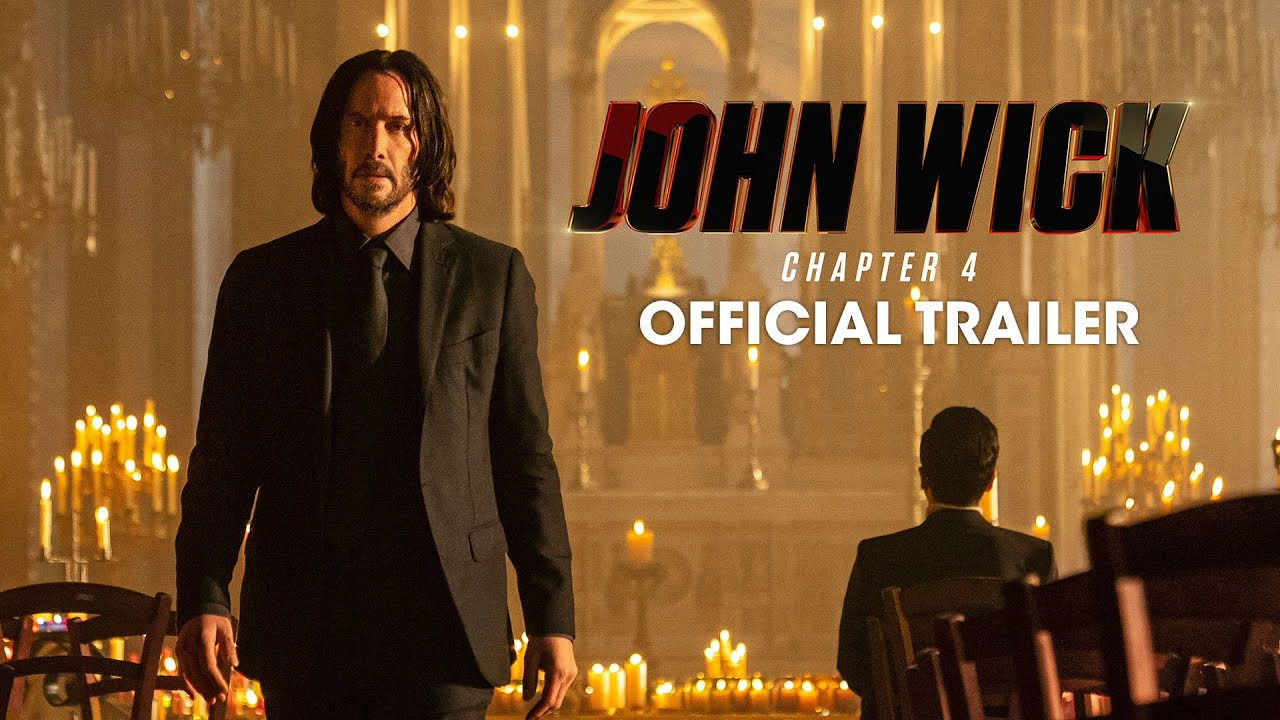
How does media language incorporate viewpoints and ideologies in the theatrical trailer to John Wick 4?


Underline the key terms


How does media language incorporate viewpoints and ideologies in the theatrical trailer to John Wick 4? 


Knee jerk reaction


The trailer to John Wick 4 uses a variety of media language to construct a straightforward ideological perspective that violence is an acceptable way to deal with issues


Plan


Genre theory = steve neale

Repetition and difference

Action 

Music

Soundtrack

Minimise risk maximise profit 

Low key lighting 

Polysemy

Suit

Deep focus cinematography 

Engagement 

Close ups 

Montage

Hyperreality

Binary oppositions

City setting

Desert setting

Hermeneutic code

Night setting 

Bird's eye view shot

Worm eye view shots

Inventive cinematography 

Rapid fire editing 

Hegemonically attractive

Generic codes of action

Intertextuality

(fan theory)

Video Game imagery

Extreme violence

Diegetic sound

Non-diegetic sound

Pleonastic sound

70’s soundtrack 

Neon red orange, etc

Gangster genre (suits) 

Proairetic codes

Checkov’s gun 

Violence

Samurai swords 

Foreign villains

White american protagonist

Linear narrative 

Restricted narratives 


Introduction


DAC - definition, argument, context


Ideology is the main viewpoint and beliefs of the producer. Producers typically use media language to encode their ideology to position their target audience and to reinforce their viewpoint. In this essay, I shall argue that the producer of John Wick 4 uses media language to construct a blunt and straightforward ideological perspective that violence is the solution to all life’s problems. This is highly conventional and appropriate of the action genre.


Paragraphs 


  • One way in which ideology is encoded in the trailer for John Wick 4 is through the use of extreme violence. This is most notably seen through…

  • Another way in which ideology is encoded is through the audience positioning

  • Yet another way in which the producer demonstrates a straightforward ideology is through the utilisation of specific genre conventions

  • Another way in which ideology is encoded is through the use of a relatable protagonist which allows the predominantly male target audience to project their fantasies on to him

  • Yet another highly connotative aspect of this trailer is the use of stereotypical representations…

  • Intertextuality is a highly useful tool for the producer to encode their ideologies 


Stereotypical representations


  • Lower MS in low key lighting of two suited men conversing at a table constructs a stereotypical representation of powerful men

  • The stereotypical representations of men are constructed through scenes of hypermasculine violence. The entire trailer is saturated with the MES of blood, sparks, fire and explosions, that constructs an ideological perspective that Wick’s life is completely based around danger

  • The MES of Wick’s suit is highly impractical, yet reinforces his cool stereotypical masculine status. It also reinforces his hegemonically attractive status, allowing him to appeal to many audiences

  • Stereotypical representations of east asian people are constructed through their choice of weapon. Here they fight using samurai swords, which constructs a highly leading binary opposition between Wick and his gun. The use of media language others and alienates east asian people and reinforces the binary opposition

  • MES of dancing reinforces a violent and energetic mode of address which reinforces the ideology that violence is good, glamourous, elegant and enjoyable

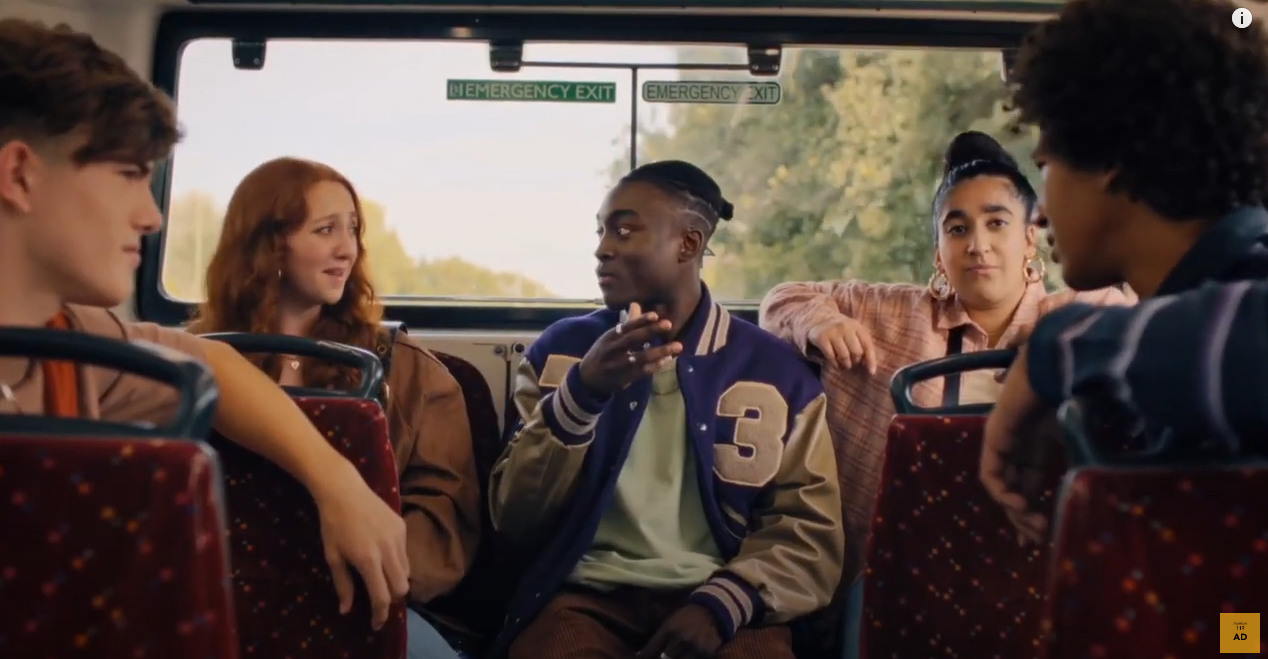
Explore how the ‘This must be the place’ TV spot advert for the fast food chain Nando's uses genre conventions to construct meaning


Underline the key terms


Explore how the ‘This must be the place’ TV spot advert for the fast food chain Nandos uses genre conventions to construct meaning 


Knee jerk reaction


The Nandos advert uses genre conventions in a typical manner to construct a relatable mode of address, to minimise risk and to maximise profit


Plan


MES

Editing

Slang 

Lexis

Shot types

Modes of address

Lighthearted and fun

Steve Neale - genre conventions

Genre changes over time 

Hybrid genre

Repetition and difference 

Semiotics

Referential code 

Symbolic code

Hermeneutic

Proairetic

Pre-sold audience

Mid close shots

Binary oppositions

Humour

Narration

Diegetic sound

Non-diegetic

Extra-diegetic

Complex diegesis

Setting

Lighting

CUs

Montage 

(representations)

Hyperreality 

(representation of young adults)

(ethnically diverse representation)

Blue

Red

Yellow


Introduction


DAC - definition, argument, context


Genre conventions refer to the elements that typically construct a genre. They are used by producers to construct a genre which is both relatable and meaningful to a target audience. Genres are fluid, and they change over time to appeal to new audiences and demographics. In this essay I shall argue that the Nando’s advert is typical of the fast food advert genre in order to effectively target a young, working class and ethnically diverse presold audience who are already familiar with Nandos as a product. 


Paragraphs


PEA - Point, evidence, argument 


One way in which the Nados advert uses genre conventions to construct meaning is through it’s highly involving montage of mid shots and close ups to construct an interesting mode of address


Another way… (dialogue, narration and lexis)


(use of typical setting, MES and lighting)


(Use of referentiality, and the assumption of a presold audience)


(genre has evolved over time


(digitally convergent media, eg digital distribution and digital post production methods)


(binary oppositions construct stereotypes for humorous effect). 


Attitude Online - audience and industry roundup

1 - Audience introduction example


Explore the ways in which audience interpretation is shaped by socio-cultural circumstances. Make reference to Attitude to support your answer - 15 marks - 25 minutes 

Knee jerk reaction 

Stuart hall - reception theory 

Definition, argument, context

Stuart Hall’s reception theory refers to the ways in which media products are encoded by producers, and decoded by audiences. In particular, producers will use media language to encode their own ideology. However, some audiences may accept the ideology of the producer, oppose the ideology of the producer, or, most often of all, negotiate the ideology of the producer. Hall argued that our reception of media products is based on our own socio-cultural circumstances. In this essay, I shall argue that audience interpretation is shaped by socio-cultural circumstances to a moderate 


2 - Clay Shirky - the end of audience and ‘speaking back’

Roland Barthe’s famous essay ‘the death of the author’ argued that the original intention of the author is completely useless. The only thing that matters is the interpretation of the audience.

Clay Shirky essentially takes this idea and flips it. Shirky argues that due to recent digitally convergent media practices, the concept of audience no longer exists or is relevant.

Whereas previously audiences had little effect on industry beyond just buying cinema tickets, audiences can now increasingly ‘speak back’ and actively shape media products. Examples of how audiences can speak back include online comment sections, the use of blogs, vlogs, interacting with online forums such as Reddit, social media such as twitter, Insta DMs and so on. Through doing so, Shirky argues that audiences are able to actively shape and create media content in a way that completely eradicates the concept of audience. 

However, there are a number of issues with this theory. Even if audiences are now making things, for example blog posts, audiences still exist, and in many ways it actually makes them more visible. Additionally, a statistical minority of audience members actively engage in media products. Additionally, this concept has many unavoidable similarities to Jenkin’s fan theory. Fans have been engaging with media products since the birth of mass media, and digital technology really doesn’t change much. Finally, creating blogs, fan edits and so on is simply engaging with a media product. If audiences truly could shape media products in an active manner, then many cult favourite TV shows just wouldn’t be cancelled, for example Inside Job, I’m Not OK With This, Firefly, Altered Carbon etc etc etc. In the ways in which audiences engage as described by Shirky, they often take a fairly passive role, and merely either advertise, or simply reinforce the hegemonic value of the product that they are ‘discussing’ 

However, due to digitally convergent technologies, it IS now more possible to create ‘content’ from scratch . Zoella is an excellent example of this. Yet it only serves to underline how standardised the industry is. If one doesn't tick certain boxes and aggressively target certain audiences, then one cannot be profitable.


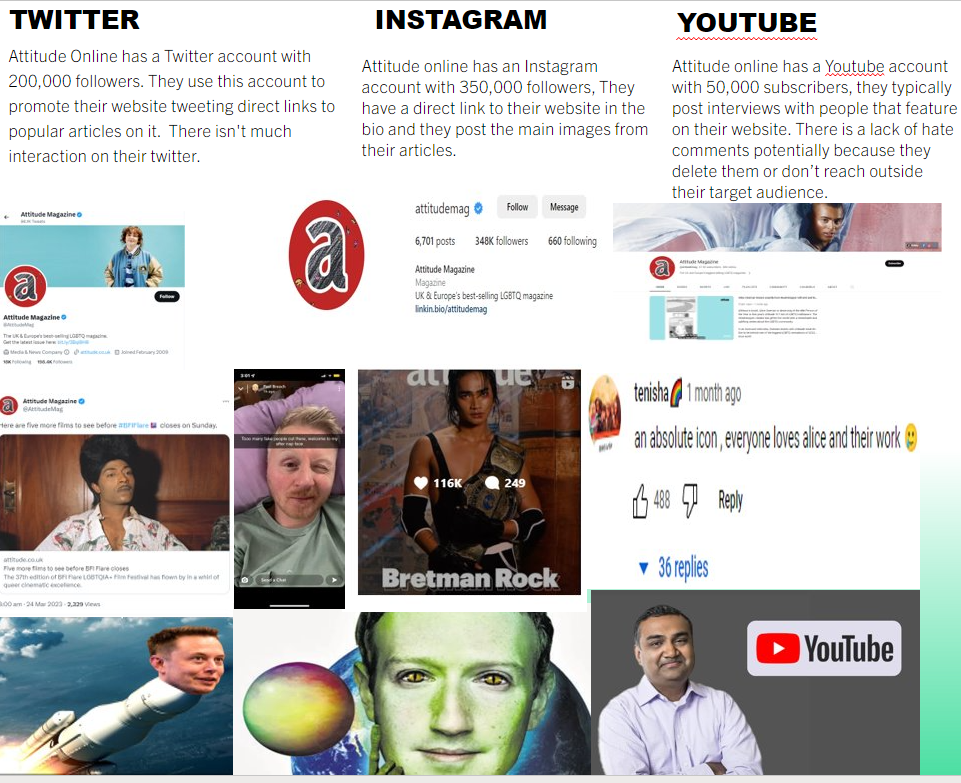
3 - industry and audience theory posters for Attitude Online


Exploring stereotypical representations of people of colour in music videos

The following examples are highly leading and highly stereotypical representations of people of colour in modern music videos. We have explored them to provide a counterpoint to the more varied and complex representations of black people as seen in the video to Formation. However it should be said that even seemingly stereotypical representations can be nuanced and can provoke a variety of responses. This post does not seek to condemn these representations, but merely outline how stereotypical representations can be constructed through media language. 


What is representation?


Representation is where something is shown or presented again by the producer, to reflect their own ideology. Producers use representations to influence or even manipulate the ideology of audiences.


Representations are reconstructions of reality. The producer constructs representations through utilising media language. This can involve direction, editing techniques, appearance, casting, shot types, costume and soundtrack 


Representations construct reality

Stereotypes - a widely held belief about a certain group of people


Can a stereotype ever be positive? One stereotype about Irish people is that they are happy, friendly, and welcoming. However, even positive stereotypes set up expectations for groups in society. negative stereotypes in particular can affect certain groups, and can even shape their behaviour, and become a self fulfilling prophesy. 


Stuart Hall and the role of stereotypes 


Why do they exist? Hall argued that stereotypes exist as an ordering system that help audiences and producers make sense of the world. Stuart Hall also argued that stereotypes only exist at points of inequality. The more marginalised a group is in society, the more robust the stereotype. Stereotypes reflect an imbalance of power. 


Case study 1 - Kankan - Wokeup 


What are the key representations in this video?


Young black men 


In terms of media language, what choices has the producer made in representing these groups?


  • Lots of digital post production editing techniques 

  • Graphics on screen in african american vernacular english, including ‘my bitch bad as hell’

  • A range of neon, clashing colours

  • Smooth, continuous editing

  • MES of costume: hoodie

  • Lexis: That’s an awful lot of cough syrup 

  • Camera rapidly moving, eg spinning 

  • Fisheye lens effect 

  • Setting: rough, rundown living

  • Sound production is muddy, samey, relaxed

  • Thick, muddy bass

  • Vocals are mumbly and difficult to hear 

  • MES of polystyrene cup filled with purple liquid

  • Purple, bright aesthetic

  • Flashing strobe lights

  • Low key lighting

  • MES of guns

  • MES of cannabis 


How do these connotative aspects encode representational meaning?


Young black men are represented in a range of stereotypical ways in this video. They are represented as violent, lazy, rich, drugged up, dangerous, underclass, criminals and gangsters. 


Why live up to stereotypes?


There are financial incentives. Various subgenres of rap, in particular ‘opioid rap’, gangsta rap etc are completely predicated on a ‘gangster lifestyle’ that ensures financial success’


Case study 2 - Ice Spice - In Ha Mood


What are the key representations in this video?


Black women


What choices has the producer made in representing these groups?


  • Setting - New york at night 

  • MES of large crowds of people 

  • Highly varied settings and MES

  • Hyper kinetic cinematography 

  • MES of comically exaggerated medallion featuring a representation of the performer herself

  • Cold, electric blue colour scheme constructs binary oppositions 

  • Extravagant white costume 

  • Harsh, aggressive, artificial high key lighting 

  • Use of settings such as underpasses and streets

  • Harsh, grey, concrete MES

  • A range of cinematographic techs including vertigo shots, shakycam , and digital shock zooms

  • Surprising fluctuation of speed and editing

  • Constant use of low angles

  • Direct mode of address

  • Rapid fire montage of mid and close up shots

  • Red push up bra

  • Tight low slung jeans 

  • Framing and composition 

  • Gestures of slapping and grabbing 

  • Music mix features heavy emphasis on throbbing sub bass

  • MES of gemstones and bling


What connotative aspects encode representational meaning?


Black women are represented as the following;


  • Hypersexualised

  • An emphasis on material goods and a materialistic lifestyle 

  • Fun and focused on partying 

  • Aggressive and powerful

  • Authentic and living an authentic lifestyle

  • Dangerous 


Why live up to stereotypes?


While the video may construct a somewhat empowering mode of address, such straightforward representations can only be dehumanising. However, we can also argue that the artist is reappropriating negative stereotypes that exist about black people. This complex and polysemic mode of address can be decoded in radically different ways by different audiences, depending on their cultural upbringing and a range of other variables.